
READER RESOURCES: THE APOCALYPSE ALMANAC: Hidden cures in our dystopian age. Check out the “Cure Cancer in Your Kitchen” chapter. FULLSCRIPT SUPPLEMENTS: top quality and economical. AFFILIATE STORE: I offer competitively priced products HERE that I have personally tested and used.
Introduction

I have been weightlifting since my early 20s and have always appreciated the extra strength it provides for my athletic endeavors. My body always responded to it in proportion to the effort I put in. Lately, however, with my Lyme disease and Parkinson’s, I have been weak and have had trouble training as hard. The critics on my home front tell me that I am getting old, but I am hoping that I will improve if I control my medical problems. I am not asking for a miracle, but it would be nice if I could get my bench press over 120 lb for 8 repetitions and my gym climbing up past 5.8 again.
Prior to the last few years, I ignored supplements except testosterone replacement. I have used this since my mid-40s, when I had a critically low testosterone blood level of 200 ng/dL. I blamed it at the time on my stressful career in cosmetic surgery, which involved dealing with all those darn women! I could not have done it without Judy.
I have known about creatine for decades and had it repeatedly suggested to me, but until yesterday, I was a creatine virgin. When I mixed it in kefir, I found out how easy it was to take. I also started growth hormone last week, and I am hoping that this, plus some peptides and the creatine, will lift my spirits, energy, and response to exercise. Growth hormone at life extension or supplement doses is no miracle, and I don’t feel anything yet. Thirty years ago, when I took testosterone and growth hormone together, I became a little inappropriately flirtatious with some of my patients.
Summary
• Creatine is a small molecule that the liver and kidneys make from arginine, glycine, and methionine. About 95 percent is in skeletal muscle, with smaller pools in the brain, heart, and pancreas.
• The cell uses creatine phosphate to rebuild adenosine triphosphate (ATP) during the first 10 to 15 seconds of all-out work. Oral supplementation raises the muscle reservoir by 10 to 40 percent.
• Monohydrate is the form to use. 700-plus studies stand behind it. Hydrochloride, ethyl ester, nitrate, and other variants cost more and offer no advantage.
• Daily 3 to 5 grams saturates muscle in 3 to 4 weeks. A loading phase of 20 grams a day in 4 doses for 1 week reaches the same point in 7 days. 5 grams is roughly 1 rounded teaspoon.
• Brain effects need higher and longer dosing. Studies on cognition, sleep deprivation, and Parkinson’s have used 10 to 25 grams a day. Animal data show creatine pre-loading reduces brain damage by up to 50 percent after experimental head injury.
• Most commercial creatine comes from China. Half of randomly tested products exceed European safety thresholds for at least 1 organic contaminant. The German Creapure brand from AlzChem is the only Western producer and the cleanest material on the market.
How creatine works
Creatine is a small nitrogen-containing compound the liver and kidneys synthesize from 3 amino acids: arginine, glycine, and methionine. The adult body holds 80 to 130 grams of it. About 95 percent is contained in skeletal muscle. The brain, heart, and pancreas hold the rest. Daily turnover is 1 – 2 grams, replaced through diet (red meat and fish) or internal synthesis.
Inside the cell, creatine kinase attaches a phosphate group to creatine, forming phosphocreatine. When a muscle contracts, ATP breaks down into adenosine diphosphate (ADP) and releases a phosphate group. Phosphocreatine then donates a phosphate back to ADP, regenerating ATP within milliseconds. This shuttle handles the first 10 to 15 seconds of all-out work. After that, glycolysis takes over, then aerobic metabolism for sustained output.
The cell holds more phosphocreatine than the diet alone delivers. Oral creatine pushes the muscle reservoir up by 10 to 40 percent. The bigger reservoir means more sprints, more reps, faster recovery between sets, and somewhat heavier weights moved over a training cycle.
Time course of effects
Loading and steady dosing both lead to muscle saturation. The loading phase is 20 to 25 grams a day, split into 4 servings of 5 grams each, for 5 to 7 days. Muscle reaches full creatine stores by the end of the first week.
Steady dosing is 3 to 5 grams a day from the start. The same saturation point arrives at 3 to 4 weeks. Loading produces faster results and a slightly larger initial weight gain. Skipping the load avoids the gastrointestinal upset some people get from large single doses.
Once stores fill, they drain slowly. Stop taking creatine and muscle stores fall back to baseline over 4 to 6 weeks. Strength gained during the period stays as long as training continues.
Strength, weight, and exercise response
Most studies show 5 to 15 percent increases in maximum power during short, repeated bouts of work. Strength tests, vertical jump, sprint times, and bench press all respond. Endurance exercise for more than 20 minutes shows little to no benefit because the phosphocreatine system has long since shut off.
The first week brings 1 to 4 pounds of weight gain. This is water pulled into muscle cells along with the extra creatine. The cells swell, which itself triggers protein synthesis. Over weeks and months of training, lean tissue follows.
Without resistance training, creatine still increases muscle stores and offers some recovery and cognitive benefits, though strength and lean-mass gains depend on lifting weights. Carbohydrate taken at the same time improves uptake by raising insulin, which signals muscle to absorb creatine more aggressively. Taking a small amount of protein with the dose adds to this effect.
Testosterone, growth hormone, insulin-like growth factor 1 (IGF-1), and thyroid all push muscle to use creatine more efficiently. A man with low testosterone who corrects the deficit will see a much larger response to creatine than the same man before correction. Adding growth hormone to the mix should compound the effect.
Effects on the brain
The brain is a 2-percent-of-body-weight organ that consumes 20 percent of the body’s resting energy. It depends on the same phosphocreatine shuttle as muscle. Brain creatine, however, is harder to raise than muscle creatine because the blood-brain barrier slows uptake. Standard 3-to-5-gram daily doses produce small or undetectable changes in brain creatine over a month.
Studies on cognition and sleep deprivation have used 10 to 25 grams per day, or single high-bolus doses of 0.35 grams per kilogram (around 25 grams for a 70-kilogram man). At those doses, brain phosphocreatine and ATP rise, and cognition under stress (sleep loss, hypoxia, mental fatigue) improves. A 2024 Scientific Reports study by Gordji-Nejad and colleagues showed a single 0.35 g/kg dose reversed metabolic and cognitive decline during 21 hours of sleep deprivation.
Depression studies, mostly in women, show that creatine added to standard antidepressants improves response. The mechanism is the same: better cellular energetics in neurons running short of fuel.
Parkinson’s and other neurological diseases
Mitochondrial dysfunction is central to Parkinson’s pathology. Dopaminergic neurons in the substantia nigra fail because their energy machinery falters, and creatine supports that same machinery. Mice given oral creatine before exposure to a classic Parkinson’s-inducing toxin (1-methyl-4-phenyl-1,2,3,6-tetrahydropyridine, abbreviated MPTP) showed protection of dopamine neurons in early animal-model work.
The Neuroprotection Exploratory Trials in Parkinson’s Disease (NET-PD) pilot gave 60 patients 10 grams of creatine a day for 2 years. Treated patients showed improved mood and a smaller increase in dose of dopaminergic medications than the placebo group. This led to NET-PD Long-term Study 1, published in the Journal of the American Medical Association in 2015. About 1,700 patients with early Parkinson’s took 10 grams of creatine a day or a placebo for 5 years. The trial stopped at the planned interim futility analysis, and creatine did not slow clinical progression on the Unified Parkinson’s Disease Rating Scale (UPDRS).
Brain effects scale with higher doses than muscle effects, and 10 grams a day is at the low end of what crosses into brain tissue meaningfully. The trial did not test 20 or 25 grams. The negative result is a verdict on a dose, not a verdict on the compound.
Some Parkinson’s specialists still recommend creatine. The safety profile is excellent, the energetic rationale is strong, and a failed primary endpoint does not rule out benefit at higher doses. Creatine produced no harm in 5 years of daily use at 10 grams a day, which is itself a useful data point.
In Huntington’s disease, creatine showed early animal-model promise but failed human trials at similar doses. Trials in amyotrophic lateral sclerosis (ALS) have also been negative. Across these conditions, the same pattern recurs: animal models show benefit, human trials at conventional doses do not. Whether higher doses would change the result remains unanswered.
Traumatic brain injury and football
The metabolic crisis that follows a concussion resembles a brief energy famine. ATP drops, calcium floods cells, glutamate floods synapses, and the brain spends days to weeks repairing the damage. Cerebral creatine concentrations fall after even mild head injuries. The rationale for creatine pre-loading in collision-sport athletes follows directly from this picture.
Rats given creatine before experimental head trauma show up to 50 percent less neuronal damage than controls. Cellular ATP holds up better, and cognitive recovery proceeds faster. A 2023 systematic review of human and animal data concluded that creatine offers neuroprotection when given as prophylaxis. Results are more reliable than when the supplement is started after injury.
Human concussion trials are sparse but encouraging. A pediatric traumatic brain injury (TBI) study using 0.4 g/kg/day for 6 months reduced post-concussive symptoms (headache, dizziness, fatigue) compared with controls. Professional football and hockey players have been taking creatine for decades, partly for performance and partly on the hope of head-injury protection.
The effect on tissue swelling after injury is indirect. The compound itself pulls water into cells (intracellular swelling). After a contusion or muscle tear, this same property helps cells maintain volume and ATP levels throughout the healing phase. Exercise-induced muscle damage markers (creatine kinase in blood, myoglobin, soreness scores) all run lower in creatine users than in controls. A 28-day pre-loading protocol of 3 grams per day reduced post-exercise soreness and inflammation in a recent randomized trial highlighted by Schwarzenegger.
Sourcing and purity: the China question
The global creatine market is a Chinese industry with a single Western exception. AlzChem GmbH, in Trostberg, Germany, is the only commercial creatine manufacturer outside Asia. Its product, Creapure, undergoes batch-by-batch high-performance liquid chromatography (HPLC) testing and meets the Food Safety System Certification (FSSC) 22000 standard. Purity runs above 99.9 percent. Dicyandiamide (DCD) stays under 20 mg/kg against a European Food Safety Authority (EFSA) limit of 50 mg/kg, and dihydrotriazine (DHT, a potentially harmful manufacturing byproduct) is undetectable.
Chinese product is not uniformly bad. Reputable Chinese manufacturers with HPLC-tested batches produce material indistinguishable from German output. Traceability is the weak point: most retail tubs ship without a verifiable chain of custody back to the synthesis plant.
A peer-reviewed survey of 33 commercial creatine products found that 50 percent exceeded EFSA-referenced thresholds for at least 1 organic contaminant. Common impurities include creatinine (an indicator of degraded material), DCD, and DHT. None is acutely toxic at typical levels, but DHT is the one chemists worry about.
The Creapure logo on a tub is the simplest quality marker. Brands that license Creapure pay extra for it and advertise the relationship. Generic creatine monohydrate with no source disclosure is a coin flip on purity.
Glycine, by comparison, is uniform across the market. The molecule is too simple to adulterate profitably, manufacturing produces few problematic byproducts, and pharmaceutical-grade glycine from any source meets the same specifications. Creatine is not in that category. Source matters, and at high doses for neurological use, it matters more.
The Orgain product I bought at Costco
Orgain Micronized Creatine Monohydrate sells at Costco for around $17 in store, or $22 online with shipping. The 1.48-pound (23.8-ounce) tub holds 135 servings of 5 grams each, which works out to roughly $0.13 to $0.16 per dose. The label says “banned substance tested,” which addresses doping concerns but not manufacturing impurities. The product does not carry the Creapure logo, so the source is most likely Chinese.
Customer reviews report decent solubility (consistent with micronized particle size) and no off-taste or grit. For general muscle and recovery use at 5 grams a day, the product is reasonable. For high-dose neurological use at 15 to 25 grams a day, a Creapure-licensed brand is the more conservative choice. Momentous, Thorne, MyProtein Creapure, and NOW Sports Creapure all carry the German material.
Why monohydrate is the form to use
Creatine monohydrate has 700-plus peer-reviewed studies behind it. Every other form (ethyl ester, hydrochloride, nitrate, magnesium chelate, buffered Kre-Alkalyn) has been tested against monohydrate and either tied or lost. None has shown meaningfully better absorption, retention, or performance. Monohydrate also costs less by an order of magnitude.
Hydrochloride and other variants dissolve more readily in water. Solubility is not absorption, however. The intestine readily takes up creatine from monohydrate, and once in the bloodstream, the molecule is identical regardless of the starting form. Schwarzenegger and most of the bodybuilding establishment have settled on this point: monohydrate is the answer.
Micronized monohydrate has a smaller particle size than standard monohydrate. It dissolves faster and produces less grit when stirred into liquid. The molecular content is identical, and the Orgain Costco product is micronized.
Dosing and physical measurements
5 grams of creatine monohydrate is roughly 1 rounded teaspoon, or 1/3 of a tablespoon. Density varies between micronized and standard grades, so the same teaspoon holds 4 to 5 grams. A digital kitchen scale gives the only accurate reading. Many users weigh once, mark the volume on a chosen scoop, and use that scoop afterward.
Volume conversions for monohydrate powder:
• 5 grams = approximately 1 rounded teaspoon = 1/3 tablespoon = about 5 mL by volume
• 10 grams = approximately 2 rounded teaspoons = 2/3 tablespoon = about 10 mL
• 20 grams = approximately 4 rounded teaspoons = 1 1/3 tablespoons = about 20 mL
Standard maintenance for muscle: 3 to 5 grams a day. Larger people (over 200 pounds) and heavy lifters benefit from 5 to 7 grams. The body excretes the surplus as creatinine in urine.
Loading: 20 grams a day (4 doses of 5 grams) for 5 to 7 days, then drop to 3 to 5 grams. Loading saturates muscle in 1 week instead of 3 to 4 weeks.
Brain and neurological use: 10 to 20 grams a day, sustained. Single pre-stress doses of 0.3 to 0.4 g/kg (about 20 to 30 grams for a 70-kilogram man) raise brain phosphocreatine measurably within hours.
Football pre-game use: anecdotal practice in the professional and college ranks involves 10 to 20 grams in the 24 hours before kickoff, on top of regular maintenance. The data behind the practice are animal models, magnetic resonance spectroscopy (MRS) scans, and indirect markers. The practice is reasonable and low risk. Whether it prevents a specific concussion is unproven.
Pre-injury continuous use: athletes facing season-long high-collision risk often run 10 grams a day continuously. This dose pattern is what the animal protection studies most resemble.
Voices from the field
Arnold Schwarzenegger covers creatine often in his daily newsletter, Arnold’s Pump Club. His position: monohydrate is the correct form. Bloating worry is overblown because the water enters cells, not under the skin. Brain doses run higher than muscle doses, around 10 to 20 grams a day. Dorian Yates, the 6-time Mr. Olympia, has made the same case in interviews with Peter Attia.
Rhonda Patrick, PhD, the cell biologist, calls creatine one of the most evidence-supported supplements available. Mike Israetel, PhD, a sports physiologist, has said in interviews that researchers have not found any reliable way that creatine harms healthy people taking 5 grams a day. Joe Rogan and Elon Musk have both endorsed it publicly. The consensus across the strength-sport world is uniform in a way few supplements achieve.
Among Parkinson’s specialists, opinions are split. Some have moved on after the negative NET-PD trial. Others continue to recommend 10 to 20 grams a day on the grounds that the trial did not test the dose suggested by animal data.
Synthesis
For my situation, with Lyme infection, Parkinson’s, and a return to lifting after a weak period, the supplement makes sense at the higher end of the conventional range. 5 to 10 grams a day for the muscle response, with growth hormone and peptides pushing the muscle to use creatine more aggressively. The Costco Orgain product supports muscle. Switching to a Creapure-licensed brand is the cleaner choice if I move toward higher doses for the nervous system.
The negative NET-PD result deserves weight. Creatine is not a cure for Parkinson’s. The energetic rationale survives the trial result, however, and combined with the negligible safety risk, daily use at 10 grams or above is defensible for someone living with the diagnosis.
Mixing in kefir is a good move. The carbohydrate and the small amount of casein lift insulin and creatine uptake. Splitting the day’s dose (morning and after training) reduces gastrointestinal upset and keeps blood levels steadier across the day.
40 years of weightlifting taught my body to respond to inputs. The inputs changed because of the disease, not age. Adding creatine at this point is another input aimed at the same response. The answer arrives in 3 to 4 weeks.
Postscript
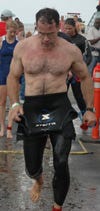
My triathlon physique from this time was achieved without supplements or hormones of any kind. The photographs above were taken from my cosmetic surgery website, DrYoho.com, which is still available on the Wayback Machine. The current site at that URL is being used as a backup for my Substack.
Judy did not tell me she ever took creatine until last week. She still looks great over 30 years later:



Selected references
1. Cleveland Clinic. Creatine: What It Does, Benefits, Supplements & Safety. Plain-language overview of creatine biology, indications, and safety.
2. Wikipedia. Creatine. Comprehensive entry covering biochemistry, history, and dosing.
3. Kieburtz K et al. Effect of Creatine Monohydrate on Clinical Progression in Parkinson Disease (NET-PD LS-1, JAMA 2015). The 1,700-patient, 5-year futility trial that ended high-dose hopes for creatine in Parkinson’s.
4. Bender A et al. Creatine supplementation in Parkinson disease: a placebo-controlled randomized pilot trial (Neurology 2006). Earlier 60-patient pilot showing mood improvement and reduced dopaminergic dose escalation.
5. Gordji-Nejad A et al. Single dose creatine improves cognitive performance during sleep deprivation (Scientific Reports 2024). Magnetic resonance spectroscopy study showing acute brain uptake of high-dose oral creatine under cellular stress.
6. Creapure. Quality and manufacturing. AlzChem documentation on the German purity standard and DCD/DHT limits.
7. ThriveOn Health. Is Creatine from China Safe?. Survey of 33 commercial products. Half exceeded European contaminant thresholds.
8. Costco. Orgain Micronized Creatine Monohydrate, 1.48 lb. Product page with serving size, price, and ingredient list.
9. Pinedo-Jauregui A et al. Neuroprotective effects of creatine supplementation in mild TBI management among contact sport athletes (Journal of the International Society of Sports Nutrition 2025). Scoping review of creatine and concussion data from animal and athlete studies.
10. Ainsley Dean PJ et al. Potential for use of creatine supplementation following mild traumatic brain injury (Concussion 2017). Review of pre-injury creatine loading and post-concussive recovery, including the pediatric TBI trial.
11. Schwarzenegger A. Common Creatine Questions and Answers. Plain-language Q and A on creatine basics from the Schwarzenegger fitness site.
12. Forbes SC et al. Effects of Creatine Supplementation on Brain Function and Health (Nutrients 2022). Narrative review of brain creatine, GAA precursor strategies, and neuroprotection data.
13. Antonio J et al. Common questions and misconceptions about creatine supplementation (Journal of the International Society of Sports Nutrition 2021). Position-stand-style review of creatine FAQ in sports nutrition.
The audio here was done with an AI
The consensus is that elevenlabs.io is the best program for transcribing text into voice. To prepare it for its task, I uploaded two hours of samples from my best recordings. These were mostly from my book dictations, where I used a basic sound studio in my closet and then had a sound engineer delete the mistakes. When I use the service, I cannot tell the AI voice from mine.
The program is expensive enough that I use it on only about half of my dictations. The rest I still do manually, and you can distinguish these by the occasional coughs and errors I make.
I also use Wispr Flow, a dictating AI, all day, every day.
This saves me over half my editing time and is my most useful and cost-effective affiliate link. I was struggling with one of its competitors, but when I started Wispr, I liked it so much that I bought a year’s membership for $144.
The backstory is that these programs, with their modest monthly charges, work as well as DragonDictate, the former gold standard. This used to cost about $800.
I have an affiliate link HERE for you to use when you buy—and if you do much writing, you have to get it. Your price is the same as if you searched for the website and bought without using it. You are going to love this thing.
Your sexual reference may be true for men, but definitely not for women. Which prompts the question, is creatine as effective for women as it is for men?
You got my attention with the “growth hormone…Life Extension”. I’d be stunned if a GH supplement did anything at all. Good luck.
I believe you extrapolated Dr Yoho’s sentence to read it as the company, not the process. Read it again: “Growth hormone at life extension or supplement doses is no miracle…”
No, the growth hormone did not come from life extension. It is injectable, and growth hormone injectable is almost harmless at lower doses. It hasn’t produced any noticeable effects yet, and I’m still taking that.
No tingling hands? Good.
Wriggling hands would imply median nerve compression from swelling, and this is uncommon at low doses.
Appreciate the info about whatu2019s coming from China. I need to switch brands. I wanted to let you know about Kaatsu blood flow restriction bands. As a prior reader of Dr Mercola, maybe you already are familiar. Iu2019ve been using them for my 3x/wk weight training for about 2 years. Iu2019m a 73 year old female, and find I can maintain and gain muscle with pretty light weights and bands. (I also use transdermal testosterone). Theyu2019re also helpful if you have heart disease or CAD. You should give them a try. KK
I feel bad for that trainer. uD83DuDE33
Iu2019ve been using Codeage: Liposomal Creatine Monohydrate for several months now, and have experienced many unexpected benefits.
I originally decided to take it after reading an article that it could help with brain fogu2026 after the very first dose, my nightu2019s sleep was easily 200% better than usual. u2026 This shocked me because Iu2019ve taken all sorts of meds for sleeping issues, and none helped; then unexpectedly (and pretty much accidentally) I found something that helps tremendously.
Itu2019s helped with:
u2022 brain fog
u2022 sleep
u2022 concentration
u2022 mitochondrial dysfunction (from psychotropic medication injury)
u2022 energy
u2022 depression
u2022 anxiety
u2022 eye fatigue
I’d like to know how you’re treating your Lyme infection.
Iu2019m no doctor- but Iu2019ve heard that this too must be treated as parasitic, not necessarily bacterial or viral. What weu2019ve been told about Lyme and Parkinsonu2019s is most certainly a lie.
Recently read an article on u201CVelvet magic beanu201D – Velvet bean, or mucuna pruriens, is beneficial for Parkinson’s disease as it naturally produces L-DOPA, which helps manage symptoms like tremors and stiffness.
Also read that chlorine dioxide can treat lyme.
Chlorine Dioxide treats much!
Hence why it was named the Universal Antidote!
I took it for six weeks at 22 drops a day, spread out over seven hours at 45-minute intervals. I lost weight, and it made me weaker, so I ended up stopping that and only using it twice a week at very small doses.
It’s easy enough to take Finbin, and maybe I’ll try it. I’ve taken it for a week or two at a time without any apparent improvement or problem.
It turns out that several analyses of my Lyme infection say that the testing showed only exposure and resolved infection. I ran it through two AIs and several practitioners, and although I was initially fooled, I don’t think I have to do very much. My primary symptomatology seems to be Parkinsonian. Although I initially took doxycycline 100 mg twice a day, Alinia 500 mg twice a day, and even considered azithromycin 250 mg a day, now I’m only on methylene blue, 50 mg twice a day.
Iu2019ve heard Parkinsonu2019s was parasitic. Sorry to not post any back-up but Iu2019m posting and running, no time. The author may want to look into that
Hey if it works is the attitude with little thought about the future.
I hear you about wanting that umpphh.
And I am 61 – no surgeries EVER, no meds of any kind for 30 years.
So I am still surfing after 46 years.
My punchline:
Creatine elevates Creatinine.
I have labs to prove it. Goes up when on and down when off.
Then the GFR is correlated with this inversely and walla you have more dialysis people!
I hope you can see this and have enough integrity to not get defensive and hold this in your heart.
Synthetics have side effects – these are Nutraceuticals, not nature anymore and not a drug.
I use herbs and whole raw food supplements for my workouts and I will live knowing no chemical junk is in my body.
Creatine elevates creatinine on eGFR. At levels discussed here It’s not causing any damage. There is a lab test that is often used on individuals that show excess creatinine on routine serum creatinine/eGFR due to higher percentage muscle mass. It is called Cystatin C. In the know Internists and of course nephrologists use this test for assessing kidney function in older adults or those with muscle wasting conditions. I spoke to my nephrologist before I embarked on a creatine supplementation program of 5 grams before exercise and he was in complete agreement that the Cystatin C test would provide a truer picture than the eGFR. Any doctor that argues against this is just too lazy to do better testing.
This is being discussed online by other physicians. Here’s a video to watch that puts your concerns to rest: https://www.youtube.com/watch?v=xmB4njObISA
great share 🙂
But my point is still valid.
What are you going to do if your synthetic lab made creatine is not available?
Lots of nature based Nitrogen support – some of which I use – not chemicals.
I champion nature and herbs and plants, not chemical dependency and there is no creatine tree out there.
But good point on the cystatin! I was gonna start recommending that on my labs.
It absolutely will elevate your Creatine and freak your PCP out. Ask your PCP to order a Cystatin-C level. This is the best measure of kidney function. I don’t know why we still use Creatinine levels. They change with hydration, muscle status (artificially goes down in sarcopenic old people even though they significant Chronic Kidney Disease) and it goes up in folks with large muscles with normal kidney function.
Yeah really frustrating – a few smaller ladies even though walk every day still have 0.60 levelsu2026.ugh
then there is the infamous changing reference range upper end seen as low as 1.1 and as high as 1.35u2026..WTH? Gaslight much?
Useful and exhausive review of Creatine Monohydrate.
There seems to be no downside excepting possible contamination for the
reasons mentioned. Very interested in your experience over the next
few months.
Thank you for the informative article. Judy looks fantastic, then and now! Yes, good genes are key. That, and no vaccines for best prognosis. Many people never achieve particularly great health or physique, and then spend the second half of thier life putting out fires while in steady decline.
They broke the mold when they made Judy. She doesn’t like to be mentioned, however. Give me some positive feedback about her again. Thank you.
Haha okay. Based on that photo alone, she should have been on the cover of Sports illustrated I would say! She still looks great, and if I had skin half as nice I would be pleased. She is evidently super savvy also, to be able to deal successfully for years, with women finicking about their looks. You are fortunate indeed to have come across her Dr Yoho!
Life in reality is always more complicated than it appears.
Robert, I am glad you took up this discussion. Once again I learned a lot about creatine I didn’t know–its neuroprotective effect most significantly. My first thought was that creatine must directly bind glutamate, or down regulate its release in TBI, but that proved incorrect. Creatine’s effects are indirect. It reduces glutamate excitatory toxicity as phosphocreatine, sustaining ATP and preserving mitochondrial membrane potential after injury. This in turn reduces reactive oxygen species and Calcium reactions to glutamate.
It down regulates the damage from glutamate without interacting directly, but by protecting the mitochondria. Energy. It’s the name of the game.
2nd smartest guy Substack recommends 500mg x 4/day. Says it turned around his momu2019s Alzheimeru2019s. Perhaps you already read his work. Brand he prefers was listed but I donu2019t recall. Thanks again for sharing your journey with us! Judy is one of a kind! Especially if sheu2019s married to you! Blessings.
Please provide source.
Not the right article but you can search for it hereu2026 probably posted in the last 6mos. He has a protocol at the end of each article though. https://www.2ndsmartestguyintheworld.com/p/breaking-nih-ebola-virologist-arrested/comments
Not the right article but you can search his previous posts for how he reversed his momu2019s Alzheimeru2019s. He has a protocol at the end of most articles. https://www.2ndsmartestguyintheworld.com/p/breaking-nih-ebola-virologist-arrested/comments
Thanks much
Is creatine injectable?
Dr Yoho,
I started Creatine 4 years ago to help with DOMS with strength training. (I am now 68) I wish I knew about it earlier as it has been shown to really help sleep deprivation cognitive decline. That would have been helpful for my too many all night, no sleep calls as an Anesthesiologist in a tertiary referral and trauma hospital.
Your claim that there is only one Western manufacturer of Creatine may have a hole in it. I have been using Klean Athlete as it is US manufacture, source chemicals are US sourced, it is third party tested for impurities and dose accuracy.
I have enjoyed your work especially the article on the side effects of Tatoo’s.
Tattoos, what a nightmare.
I use the “hydra-chloride” version of creatine because it doesn’t BLOAT your face and body like the “monohydrate” version does. Hydra-chloride is more expensive and has the same benefits in trials.
So when are Judy’s tips going to start showing up? She looked amazing 30 years ago – pre or post kids? And still looks beautiful today.
Creatine sounds interesting. Never tried it before.
Here’s a thought. Maybe I can take one of those (inBody) dexa scans pre-creatine, then chart the changes in percent body fat and skeletal muscle mass over time. Any other metrics I should monitor? I already have a growth hormone supplement (fasted-state niacin) and testosterone (from a light source) and those levels are good. But PBF has gone from 19.5 to 22.0 in about a year…
I buy ML Naturals that reads made in USA Washington state. has third party trusted lable and cGMP lable(current good manufacturing practice) I have used 3 grams a day for about a year, no noticeable difference except my doctor saying my creatine levels are too high at 1.1(blood work)
I take it on the advice of my trainer.
Great article! thank you.
I’m taking 10 g most days of the Costco brand.
in comparing my brand of Creatine to your suggested clean brands the search engine states that Thorne switched their sourcing in 2022 and no longer states it is Creapure. However Momentous does use Creapure. just an Fyi.
Yay for Judy!! And that beautiful smile! Funny you didnu2019t know sheu2019d taken creatine! What else donu2019t you know? Haha!
After 35 years, my husband is still telling me stories about himself I never knew!uD83DuDE01
Exactly.
I have been using Creatine for several years that is manufactured in Canada, I purchase it through Amazon at amazon.ca/Micronized-Creatine-Monohydrate-Absorption-Unflavored/dp/B08SJ8C9R1?pd_rd_w=KmmeY&content-id=amzn1.sym.7d7770e8-00e0-4bbc-964d-eca139a61307&pf_rd_p=7d7770e8-00e0-4bbc-964d-eca139a61307&pf_rd_r=ZFCZV8V404Q3CXAGRPXZ&pd_rd_wg=SdnmB&pd_rd_r=3334c571-700b-498e-9c9d-f77878cd039d&psc=1
Dr. Yoho, do you have any experience with baobab fruit powder for digestive issues? Some might say it causes intestinal gas while some brands claim that it reduces bloating and constipation. It is high in vitamin C and potassium.
Sorry, I don’t know.
Trying to share as an email and it won’t work, Very Very Frustrating
That’s why I don’t subscribe to paid subscription Because I can’t share any of your articles, I tried to Facebook and that doesn’t work Either, VERY Frustrating indeed
Am I the only one that can’t tolerate creatine? One dose of 5 g makes my ankles swell and then my feet hurt for the next two or three days. I’ve tested it over and over and it’s always the same results.