READER RESOURCES: All my books are now available as paperbacks on Lulu. THE APOCALYPSE ALMANAC: Hidden cures in our dystopian age. Check out the “Cure Cancer in Your Kitchen” chapter. FULLSCRIPT SUPPLEMENTS: top quality and economical. AFFILIATE STORE: I offer competitively priced products HERE that I have personally tested and used.
Summary
· Depression is a disease of inanition: no energy, no drive, a brain that will not turn over. Low thyroid function produces the same patient, and thyroid hormone, particularly the active form, reverses it in days to weeks.
· Psychiatry has known this since 1969, when Arthur Prange showed that 25 micrograms of T3 (triiodothyronine, the active hormone) made a tricyclic antidepressant work faster and more effectively. Meta-analyses, a Jerusalem trial that doubled remission rates, and the largest antidepressant study ever conducted, STAR*D, confirmed it. The treatment is in the American Psychiatric Association’s guidelines, yet nearly nobody uses it.
· Peter Whybrow and Michael Bauer have treated resistant depression for 30 years using T4 (thyroxine, the storage hormone) at 300 to 500 micrograms a day, 3 to 4 times a day, and have followed their patients’ hearts and bones. The atrial fibrillation and osteoporosis the endocrinologists warn about did not appear.
· Those warnings come from Graves’ disease, a damaged gland that pours out hormone that nothing turns off. A tablet is turned off by simply not taking it. The specialty’s fear of that one condition has been used to withhold treatment from the other, and 94 percent of European endocrinologists surveyed in 2025 would still refuse thyroid hormone to a depressed patient with normal labs.
· The drugs given instead are a disgrace. SSRIs (selective serotonin reuptake inhibitors) beat placebo by less than 2 points on a 52-point scale, were tested against withdrawal rather than placebo, double suicidal thinking in healthy volunteers, and leave half the people who stop them in agonizing withdrawal. The antipsychotics added when SSRIs fail belong to the drug class linked to 10 to 20 years of lost life.
· Conventional practice, for psychiatrists knowledgeable enough to offer it, is to draw a depressed patient’s free T3 before prescribing. If it is in the bottom half of the range, or the temperature is low, he is treated with thyroid hormone first, and the antidepressant question is revisited in 3 months. The patient already on a failed antidepressant adds 25 to 50 micrograms of T3, the cheapest and best-studied option his psychiatrist never offered him.
The patient nobody tests
Laura was 28 when she wrote her story for the Stop the Thyroid Madness website. She had started antidepressants at 13, and in her words, “none of them ever helped at all.” Her TSH (thyroid-stimulating hormone, the pituitary’s signal to the gland) and T4 were always within the normal range, so her doctors told her nothing was wrong and that it was all in her head. Then, as she put it, “a psychiatrist of all people checked my T3 (which was in the toilet according to him) and started me on Armour.” Within days, she felt like a new person: “I do not dread waking up in the morning and I have energy to just live my life!” She ended with the sentence this essay is about: “I am NOT depressed (and I wonder if I ever even was)!”
Irene waited longer. Her doctors told her for 26 years that it was all in her head, kept her on antidepressants for 15 of those years, and said her TSH was normal and that she was fine.
Three weeks after starting Armour Thyroid, 80 percent of her symptoms were gone, and the mood swings with them. “I can’t believe I waited 26 years and listened to my doctors telling me that it was all depression.” A third woman, posting a review of Cytomel (liothyronine, synthetic T3) on Drugs.com, had spent 5 years on antidepressant after antidepressant, had been told by an endocrinologist that her thyroid was fine, and had a low T3 with a TSH barely above the range. One doctor tried Synthroid (levothyroxine, synthetic T4) with no result. A second agreed to Cytomel: “Within a day, I felt AMAZING! It was like someone put new batteries in my body!”
These three stories, and the thousands like them on the patient websites, share a pattern. The symptoms were fatigue, apathy, slow thinking, poor sleep, weight gain, and a flat mood. The screening test was a TSH, which measures the pituitary’s opinion rather than the hormone the brain uses. The treatment was a serotonin drug, repeated with a new brand each time the last one failed. The cure was the active thyroid hormone, which nobody measured for years. And the physician who finally measured it was, more often than not, a psychiatrist rather than an endocrinologist.
Inanition, and what relieves it
The oldest term for what depression does to the body is inanition: emptiness, the exhaustion of a creature that has stopped taking in fuel. The depressed patient cannot get out of bed, cannot start a task, cannot finish a sentence, and sleeps 12 hours yet wakes tired. The psychiatric checklist records this as “fatigue or loss of energy” and “psychomotor retardation,” two of the 9 items in the Diagnostic and Statistical Manual‘s definition of a major depressive episode, and then does nothing about it. A serotonin drug does not supply energy. Patients on them describe emotional numbness, and those who feel better often feel less of everything.
Thyroid hormone is the body’s energy regulator. T3 sets the rate at which every cell burns fuel. It does so partly through the mitochondria, where it binds to the cell’s own power-plant DNA and drives the genes for oxidative phosphorylation, the process that turns food into usable energy.
The brain is the organ that depends on thyroid hormones most. It makes most of its own T3 from T4 using an enzyme called type 2 deiodinase, and the brain’s thyroid hormone level is only about a fifth of the blood’s. A small shortfall in conversion therefore produces a hypothyroid brain while blood tests remain normal. A 2021 review in the Journal of Endocrinological Investigation called this central hypothyroidism and proposed that it explains depressed patients with ordinary labs.
The pictures exist. Michael Bauer and his colleagues used PET (positron emission tomography) scans, which show how much glucose each brain region is burning, in 14 untreated hypothyroid patients. Their anterior cingulate, prefrontal cortex, striatum, and amygdala were running cold, and after thyroid replacement, every region returned to normal, with prefrontal recovery tracking the fall in TSH.
The same group scanned 10 women with bipolar depression who had failed every drug, gave them T4 at an average of 320 micrograms a day (a large dose) for 7 weeks, and observed 7 of the 10 go into remission while the overactive limbic regions quieted. A later placebo-controlled version, published in Molecular Psychiatry in 2016, found the same pattern, and the metabolic changes in the thalamus and striatum correlated with the decline in depression scores. Bauer’s summary was that the adult brain is a target organ for thyroid hormone. Endocrinology has never treated it as one.
The clinical observation is 150 years old. William Gull described the adult form of thyroid failure in 1873, and George Murray cured it in 1891 by injecting sheep thyroid under the skin; his patient lived to 74. In 1949, Richard Asher published “Myxoedematous madness” in the British Medical Journal: 14 hypothyroid patients diagnosed as psychotic, melancholic, or paranoid, 9 of whom recovered on thyroid hormone. Asher’s point was that the mental disease was treated as the primary problem while the gland was ignored, and his other famous line was that despair is best treated with hope, not dope. Seventy-five years later, the dope is a serotonin drug, and the hope is a free T3 that nobody draws.
What psychiatry learned and then forgot
Arthur Prange, a psychiatrist at the University of North Carolina, published the study in 1969 in the American Journal of Psychiatry. He gave 20 depressed patients with normal thyroid function the usual dose of Tofranil (imipramine), a tricyclic antidepressant, and added 25 micrograms of T3 daily. The patients receiving T3 responded faster and more fully, and the hormone had measurable effects: it shortened the ankle reflex and altered protein-bound iodine. Women benefited most. Prange proposed that the antidepressant increased the available neurotransmitter while the hormone made the receptors more sensitive to it, and that hypothesis still stands.
The trials that followed turned the observation into a treatment. A 1996 meta-analysis in the Archives of General Psychiatry pooled 8 controlled studies of T3 added to a tricyclic in 292 patients who had not responded: 57 percent responded with T3, compared with 24 percent without, yielding a number needed to treat of 4. A 2001 meta-analysis in the American Journal of Psychiatry pooled 6 randomized trials in which T3 was added from the first days of treatment and found that 5 of the 6 showed a faster response. In 2007, Bernard Lerer’s group in Jerusalem ran the trial the field had been waiting for: 124 patients with major depression, all on Zoloft (sertraline), half randomized to T3 at 40 to 50 micrograms a day and half to placebo. Response was 70 percent with T3, compared with 50 percent without, and remission was 58 percent, compared with 38 percent. Patients who remitted had lower T3 to begin with, and the hormone produced no significant side effects.
STAR*D (Sequenced Treatment Alternatives to Relieve Depression) was the largest antidepressant trial ever conducted, the National Institute of Mental Health’s 4,000-patient study of what to do when the first drug fails. At its third level, it randomized 142 patients who had failed 2 antidepressants to either lithium, the textbook augmentation, or T3 at 25 to 50 micrograms a day. Remission was 24.7 percent with T3, compared with 15.9 percent with lithium. Lithium produced more side effects, and 23 percent of lithium patients discontinued because of them, compared with 10 percent on T3. The authors concluded that T3 was better tolerated than lithium. The finding was incorporated into the American Psychiatric Association’s 2010 practice guideline for major depression, where thyroid hormone is listed as an augmentation strategy “recommended with moderate clinical confidence,” the same grade as lithium and the atypical antipsychotics.
Two trials that added T3 to a full dose of an SSRI in unselected patients found no benefit, and the specialty cites them. Neither trial measured whether patients had low T3 to begin with, nor did either try the hormone alone. The Jerusalem trial, which did look, found that patients who remitted were those who started low. That is the thyroid patient of this book, sent to a psychiatrist because his TSH was normal, and the hormone works for him because he needed it.
High doses, and the hearts and bones that did not break
The tricyclic-plus-T3 story is the mild version. The strong version is high-dose T4, and its home is the University of California at Los Angeles. Peter Whybrow, who had worked with Prange in the 1960s, began there in the late 1980s to treat rapid-cycling bipolar patients who had failed other treatments, using doses of thyroxine that endocrinologists reserve only for suppressing thyroid cancer. Bauer joined him, and the two of them, first in Los Angeles and then in Berlin and Dresden, have treated these patients for 30 years.
Their 2002 report in Neuropsychopharmacology followed 21 patients with recurrent depression resistant to prophylaxis for an average of 4 years at a mean T4 dose of 379 micrograms per day. Recurrences decreased from 8.6 to 2.8 per patient, and hospitalizations from 3.1 to 1.9. 71 percent were much or very much improved. Adverse effects included one case of tremor and a mild increase in resting heart rate.
The usual replacement dose of T4 for a hypothyroid adult is 100 to 200 micrograms a day. Whybrow and Bauer use 300 to 500, and the first thing they noticed was that their patients tolerated it. In a 2002 comparison in the Journal of Affective Disorders, 500 micrograms a day was given to refractory mood patients and to healthy volunteers. None of the patients dropped out. Thirty-eight percent of the healthy volunteers dropped out because of anxiety, tremor, restlessness, headache, racing heart, and sweating. The depressed brain, in other words, was deficient in the hormone and used it, while the normal brain was flooded.
Whybrow had described the same in 1994: responders had a TSH below 0.1 and no tachycardia, palpitations, tremor, or weight loss.
The endocrinologists’ two objections are atrial fibrillation and bone loss, and the psychiatrists measured both. Bauer’s 2004 study in the Journal of Affective Disorders followed 21 patients on a mean of 411 micrograms of T4 per day, with serial bone density scans over nearly 3 years. Bone loss at the spine, femoral neck, and trochanter was no different from the expected age-related decline. A 5-year follow-up by Ricken in 2012 found the same.
Pilhatsch and Bauer published the cardiac data in 2018. Twenty-three patients, with a mean dose of 463 micrograms per day, underwent blood pressure measurement, resting ECG, echocardiogram, stress test, and 24-hour Holter monitoring over an average of 20 months, after a mean of 16 months on treatment. “None of the assessed cardiac parameters,” they wrote, “was in a range predictive of cardiac dysfunction.” The group has never seen atrial fibrillation in a patient on high-dose T4.
Tammas Kelly, a psychiatrist who treats bipolar disorder, used T3 instead and published the largest series. His 2009 chart review in the Journal of Affective Disorders included 159 patients with resistant bipolar II depression who received a mean T3 dose of 90 micrograms per day (range up to 188) and were followed for an average of 20 months. Eighty-four percent improved, and a third went into remission. The most common side effect was tremor, and 10 percent discontinued because of it. One patient on 125 micrograms developed atrial fibrillation, which resolved when the dose was reduced.
Kelly then wrote two analyses of the risk, one on bone in 2014 and another on the heart in 2015. The second was titled “An examination of myth: a favorable cardiovascular risk-benefit analysis of high-dose thyroid for affective disorders.” A 2016 review of thyroid cancer patients kept on TSH-suppressive doses for years concluded that “high-dose thyroid does not seem to elevate the risk of osteoporosis, heart disease, or mortality.” His protocol is published: start at 25 micrograms, increase to 50, and most patients respond between 50 and 150 micrograms a day, with the dose reduced if the resting pulse exceeds 100. Most of his patients have been on it for 3 to 10 years.
The Graves’ confusion
The endocrinologists’ fear has one source, and it is the disease they see most and treat worst. Graves’ disease is an autoimmune attack that whips the gland into pouring out hormone, and it affects 2 to 3 percent of the population. There is no tablet to stop taking. Bringing the level down takes antithyroid drugs, radioactive iodine, or surgery, and it takes months, during which the patient’s heart races and his bones demineralize.
The Framingham study followed 2,007 people over 60 for 10 years and found atrial fibrillation in 28 percent of those with a TSH of 0.1 or lower, compared with 11 percent with a normal TSH. Nearly all of those with suppressed TSH had the disease rather than a prescription. The 187 people with a TSH between 0.1 and 0.4 had 12 percent, which was no different from normal.
A hormone taken as a tablet is different. T3 clears in a day or two; T4 in about a week. A patient who takes too much feels a pounding heart, sweating, tremor, and poor sleep, and cuts the dose. The Tayside study in Scotland followed 16,426 patients on thyroid replacement and found that those with a low but detectable TSH, between 0.04 and 0.4, had no excess of heart disease, arrhythmia, or fracture. A second Tayside study compared 34,000 patients on T4 with 400 on T3 over 9 years and found no difference in death, heart disease, atrial fibrillation, or fracture. A Swedish registry of half a million thyroid patients found no excess mortality in the 11,000 taking T3. Antonio Bianco, a past president of the American Thyroid Association, reviewed every human trial of T3 in 2017, looking for the harm the guidelines warn about, and wrote that he “could not find a single one.”
Neal Rouzier, who trained a generation of hormone physicians, made the point in Hormone Secrets: “Yes, some studies showed low or suppressed TSH is associated with atrial fibrillation. However, that is in patients who have Grave’s Disease. Remember that association does not prove causation. More specifically, there is no study where administering thyroid has ‘caused’ atrial fibrillation.” Endocrinologists know this from their own practice. They keep thyroid cancer patients on TSH-suppressive doses for decades and do not lose sleep over it. The same physician who suppresses a cancer patient’s TSH to 0.1 on purpose will take a hypothyroid patient’s T3 away at a TSH of 0.3 and send her to a psychiatrist.
Two specialties, one secret
The treatment is included in the psychiatric guideline but not in any endocrine guideline. The American Thyroid Association’s 2014 hypothyroidism guideline asked whether T4 or T3 has any role in depressed patients with normal thyroid tests and answered no to both. In 2025, a group led by Laszlo Hegedüs surveyed members of every European national endocrine society and published the results in Frontiers in Endocrinology. Of 5,695 endocrinologists who responded, 348 (6.1 percent) would use thyroid hormone in a depressed patient with normal labs who had failed antidepressants. Ninety-four percent considered it not indicated.
The authors noted that psychiatric guidelines from 6 countries and organizations recommend treatment, while endocrine societies support none of it, and they called for consensus between the specialties. It has taken 55 years to reach one.
The psychiatrists who use it describe the atmosphere. Jim Phelps, who wrote the Psychiatric Times series on high-dose thyroid, recalled that prescribing thyroid for mood “was thought to be almost irresponsible, at least by some endocrinologists.” Most primary care physicians and endocrinologists, he added, “have never heard anything about this high-dose approach.” He concluded that the treatment is rare because “the lack of a psychiatric norm around using supraphysiologic thyroid is the limiting factor here, not an adverse risk-to-benefit ratio.” Phelps himself admitted he was still hesitant to adopt Kelly’s conclusions. A psychiatrist told Rouzier he sometimes prescribes four 200-microgram T4 tablets a day (800 micrograms), 6 times the replacement dose. As Hormone Secrets put it, since psychiatrists reserve this treatment for themselves, it does not threaten the industry’s profitable antidepressants.
Follow the money, and the picture clears. Endocrinology is a small specialty whose bread and butter is hypothyroidism, which is most of the thyroid field and needs no specialist at all. If primary care physicians and psychiatrists treated it by dosing T3 and desiccated thyroid to symptoms, the endocrinologist would lose half his patient volume and half his income, and the TSH-only, T4-only standard that keeps patients sick and returning is the fence around his pasture.
Psychiatry’s interest is different and compatible. Thyroid hormone is generic, costs a few dollars a month, and is not owned by any drug company. A psychiatrist who told the world that a hormone tablet outperformed lithium and matched the atypical antipsychotics in his own guideline would be announcing that a $7.5 billion-a-year drug is unnecessary, and the industry that funds his conferences, journals, and key opinion leaders would hear him. He kept the hormone for his hardest cases and said nothing.
Yoho comment: I think the collusion is mostly tacit, which makes it worse rather than better because no one had to be bribed. The endocrinologists needed the hormone to look dangerous so only they would prescribe it, and the psychiatrists needed it to look like an obscure last resort so the drugs would keep selling. Each specialty’s silence protected the other’s income, and neither had to say a word. The one group with no seat at the table was the patients, who assembled the knowledge themselves on a website after their doctors had given up on them. Broda Barnes treated these patients with thyroid hormone for 40 years and was dismissed by both specialties, which tells you the arrangement is older than Prozac.
What the serotonin drugs do
Prozac (fluoxetine) arrived in 1987, accompanied by a theory concocted in a marketing department. The chemical imbalance was a slogan, and in 2022 Joanna Moncrieff and Mark Horowitz published an umbrella review in Molecular Psychiatry that synthesized all available evidence on serotonin and depression: receptor and transporter studies, tryptophan depletion, and genetics. In their words, there was “no support for the hypothesis that depression is caused by lowered serotonin activity or concentrations,” and some evidence that long-term antidepressant use lowers serotonin. Moncrieff told the press that “it is high time to inform the public that this belief is not grounded in science.” Ronald Pies, the editor emeritus of the Psychiatric Times, had conceded years earlier that the chemical imbalance was “a kind of urban legend,” never a theory serious psychiatrists held.
The drugs built on the legend do almost nothing. Irving Kirsch obtained every trial the manufacturers had submitted to the Food and Drug Administration (FDA), both published and unpublished. He reported in PLoS Medicine in 2008 that the drugs beat placebo by 1.8 points on the 52-point Hamilton depression scale, below the 3-point threshold the British regulator had set for clinical significance. The 2018 Lancet meta-analysis of 522 trials, which the press reported as proof the drugs work, found an effect size of 0.3, about 2 Hamilton points. Michael Hengartner showed in 2022 that a clinician cannot detect a change of fewer than 3 to 5 points, and perhaps not fewer than 7. The patients’ own ratings in the original Prozac trials showed the drug did not work, which is why the German regulator at first called it “totally unsuitable for the treatment of depression.”
STAR*D, the trial from which the T3 result came, is the test case for how the rest of the field handles its results. The published cumulative remission rate was 67 percent. When Ed Pigott and colleagues reanalyzed the raw data under the trial’s own protocol and published the result in BMJ Open in 2023, the rate was 35 percent. The investigators had inflated it by switching outcome scales and counting patients who were never depressed enough to qualify. Of the 4,041 patients enrolled, 108, or 2.7 percent, got well and stayed well through the 12-month follow-up. That is the performance of the standard sequence of antidepressants, in a government-funded trial, in the drugs’ best light.
The trials were rigged in a second way, as Robert Whitaker spelled out in Anatomy of an Epidemic and in his 2016 review of the antipsychotic literature. The relapse-prevention studies cited to keep patients on their drugs for life took patients who were stable on medication, abruptly withdrew the drug from half of them, and called the withdrawn half the placebo group. In 80 percent of antipsychotic studies, the drug was stopped cold. Withdrawal from these drugs produces agitation, insomnia, anxiety, and despair, and the trials recorded these symptoms as relapse. Hengartner’s 2020 review in Therapeutic Advances in Psychopharmacology concluded that the withdrawal confounding “renders their findings uninterpretable.” He found “no reliable evidence that long-term antidepressant treatment is beneficial.” David Cohen at UCLA reviewed 80 discontinuation trials and found that exactly 1 used a design that separated relapse from withdrawal. The entire long-term evidence base for these drugs is a measurement of how bad it feels to stop them.
It feels bad. James Davies and John Read’s 2019 systematic review found that 56 percent of patients who stop an antidepressant experience withdrawal symptoms, that 46 percent describe them as severe, and that symptoms can persist for months. Horowitz and David Taylor showed in The Lancet Psychiatry that the dose must be reduced gradually, to one-fortieth of the therapeutic dose, over months rather than weeks. The drug’s grip on the serotonin transporter is nearly complete at every ordinary dose and lets go only at the bottom. The European Medicines Agency recognized in 2019 that the sexual dysfunction these drugs cause “can be long-lasting in some patients, even after treatment withdrawal,” a condition patients had been describing for 20 years while being told it was their depression. And a 30-year prospective study of 591 adults in Zurich, published by Hengartner in 2018, found that antidepressant use predicted a worse long-term course of depression, with an 81 percent higher likelihood of increased severity after adjustment for everything the authors measured.
Then there is the violence. David Healy gave Zoloft or a comparator drug to 20 healthy volunteers with no history of depression in a double-blind crossover study, and 2 of the 20 developed suicidal ideation on sertraline. One of them “suddenly decided she should go and throw herself in front of a car, that this was the only answer.” The other “spent a long period lying in her bed fantasising about hanging herself from a beam across the bedroom ceiling.” The mechanism is akathisia, an inner torment and restlessness that patients describe as wanting to crawl out of their skin. It was the state Stewart Dolin, a Chicago lawyer, was in when he killed himself days after starting generic Paxil (paroxetine). A jury awarded his widow $3 million in 2017, but an appeals court threw out the verdict because the FDA, rather than the manufacturer, controlled the label.
The FDA knew. In 2004, it placed a black box warning on every antidepressant for children and adolescents, stating that the drugs doubled suicidal thinking and behavior, with 4 percent versus 2 percent on placebo. In 2007, it extended the warning to age 24 after an analysis of 77,000 adults found 5 additional cases of suicidality per 1,000 young adults treated. Lilly’s own 1985 internal memorandum, disclosed in litigation, found suicides on Prozac 5.6 times higher than on imipramine. Peter Gøtzsche, who founded the Nordic Cochrane Centre, estimated, based on the manufacturers’ own data, that the FDA’s 2006 meta-analysis undercounted suicides by a factor of 15.
In 2010, Thomas Moore and colleagues reviewed the FDA’s adverse event database for drugs disproportionately linked to reports of violence toward others. Thirty-one drugs made the list. Eleven were antidepressants. They concluded that violence is “a genuine and serious adverse drug event associated with a relatively small group of drugs,” and that the drugs are the ones handed out for sadness.
The grab bag
When the serotonin drug fails, which is most of the time, the psychiatrist reaches into the bag. The bag holds an anticonvulsant, a second antidepressant, a benzodiazepine, a stimulant, and increasingly an antipsychotic, none of which was tested for that purpose. Ramin Mojtabai and Mark Olfson examined 13,079 office visits to psychiatrists between 1996 and 2006 and published their results in the Archives of General Psychiatry in 2010. Visits ending with 2 or more psychotropic prescriptions rose from 43 percent to 60 percent, and visits with 3 or more doubled, from 17 percent to 33 percent. There is no trial of any of these cocktails. There is no trial of most of the individual ingredients for the conditions they are prescribed for.
Neurontin (gabapentin) is the model. It was approved in 1993 as an add-on for epilepsy and nothing else, and its maker paid $430 million in 2004, with a criminal plea, for marketing it for bipolar disorder, pain, migraine, attention deficit, and restless legs. The marketing worked after the fine. A study of national ambulatory data from 2011 to 2016 in Psychiatric Services found that 99.4 percent of gabapentin visits were for an off-label indication, with depression and anxiety among the most common. Lamictal (lamotrigine) and Topamax (topiramate), two more seizure drugs, are used the same way for depression, anxiety, drug abuse, and bipolar disease, and their side effects include fever, hair loss, double vision, and suicide. Military psychiatrists favor them for combat troops.
The antipsychotics are the new favorite. Abilify (aripiprazole) was approved in 2007 as the first antipsychotic add-on for depression. Seroquel XR (quetiapine) followed in 2009, Rexulti (brexpiprazole) in 2015, and Vraylar (cariprazine) in 2022. By 2014, Abilify was the best-selling drug in the United States, at $7.5 billion a year, most of it for people who had never been psychotic.
Glen Spielmans pooled the 14 trials behind these approvals in PLoS Medicine in 2013. The drugs improved the remission rate, with a number needed to treat of 9, but produced no improvement in quality of life or functioning. The number needed to harm was 4 for akathisia with Abilify, 3 for sedation with Seroquel, 6 for abnormal metabolic labs with Seroquel, and 9 for weight gain with the Zyprexa (olanzapine) combination. The authors asked that the results be read in light of “the abundant evidence of potential treatment-related harm.” Every one of these approvals was for 4 to 12 weeks of use, yet patients are kept on them for years.
The manufacturers were not waiting for approvals. Bristol-Myers Squibb paid $515 million in 2007 for promoting Abilify to child psychiatrists and nursing homes. Eli Lilly paid $1.415 billion in 2009, including a $515 million criminal fine, the largest in healthcare history at the time, for promoting Zyprexa for dementia in the elderly and for spending “significant resources” on nursing homes and assisted-living facilities. AstraZeneca paid $520 million in 2010 for marketing Seroquel for aggression, anger management, anxiety, dementia, depression, post-traumatic stress disorder, and sleeplessness, and for paying doctors to do so. Johnson & Johnson paid $2.2 billion in 2013 over Risperdal (risperidone), and Janssen pleaded guilty to promoting it for dementia, even though half of its prescriptions were for that use. The fines were a rounding error compared with sales, and the prescribing habits they bought are still in place.
Yoho comment: I understand the psychiatrists’ frustration. Their patients are miserable, nothing in the bag works, and the patient in the chair wants something. But trying everything is not medicine; it is a shrug with a prescription pad, and the pretense that the bag holds a treatment is what keeps patients coming back. I prescribed a thousand of these drugs myself before I read the literature, so I know how the habit forms. It does not survive reading the trials.
The drugs that take 10 to 20 years off their victims’ lives
A 2017 meta-analysis in the Lancet Psychiatry of 11 studies found that people diagnosed with schizophrenia lose 14.5 years of life, with 15.9 for men and 13.6 for women, and an average life expectancy of 65. A 2014 review in World Psychiatry put the loss at 10 to 20 years and noted that it exceeds the 8 to 10 years lost to heavy smoking. The deaths are cardiovascular, metabolic, and respiratory: heart attacks, strokes, diabetes, pneumonia, and sudden cardiac death. The specialty attributes the gap to the illness, smoking, and poverty. The drugs do most of the damage.
The evidence that the drugs are causal appears in the specialty’s own journals. A 17-year Finnish follow-up, published in the British Journal of Psychiatry in 2006, tracked 99 people with schizophrenia, 39 of whom died. The number of antipsychotics a patient was taking at baseline predicted death in a graded manner, with a relative risk of 2.5 for each additional drug. A 2009 review in Schizophrenia Research found that 3 of 5 studies linked higher antipsychotic doses to higher mortality, and 2 of 4 linked polypharmacy to shorter life.
Wayne Ray’s 2009 study in the New England Journal of Medicine compared 44,218 users of the older antipsychotics and 46,089 users of the atypicals with 186,600 matched controls. The drugs doubled the rate of sudden cardiac death, with 1.99-fold for the old drugs and 2.26-fold for the new, and the risk rose with the dose, from 1.59 at low doses of atypicals to 2.86 at high. When the FDA pooled 17 placebo-controlled trials of atypicals in elderly dementia patients in 2005, 15 of them showed excess deaths, a 1.6 to 1.7-fold increase in a few months, from heart failure, sudden death, and pneumonia. That is a randomized demonstration that the drugs kill, and it earned a black box and nothing else.
Zyprexa is the drug at issue. Lilly’s own documents, disclosed in the New York Times in 2006, showed that 30 percent of patients gained 22 pounds or more in a year, and some gained 100 pounds. Internal documents dating back to 1995 described the drug’s tendency to raise blood sugar. Weight gain, high blood sugar, and high triglycerides are risk factors for diabetes and heart disease, and Lilly paid $1.2 billion to 28,500 patients who developed diabetes or heart problems on the drug. The brain shrinks, too. Nancy Andreasen’s group at Iowa followed 211 patients with 674 MRI scans over an average of 7 years. They reported in the Archives of General Psychiatry in 2011 that the intensity of antipsychotic treatment predicted the loss of brain tissue, gray and white matter both, after controlling for illness severity, duration, and substance abuse, which had little or no effect.
The patients who avoid the drugs do better. Martin Harrow at the University of Illinois followed patients with schizophrenia for 20 years. At 15 years, 40 percent of those off antipsychotics were in recovery, compared with 5 percent of those on them. At 20 years, the odds of recovery off the drugs were 6-fold higher, and rehospitalization odds were cut by 87 percent. In Whitaker’s account of the same data, 87 percent of the patients who stayed off medication had 2 or more periods of recovery; 17 percent of those continuously on it ever recovered once. Gøtzsche’s estimate, in the BMJ in 2015, is that psychiatric drugs kill more than half a million people over 65 each year in the Western world, and that the benefits “would need to be colossal to justify this, but they are minimal.”
Yoho comment: Every one of these drugs is now prescribed as an add-on for depression to people who were never psychotic, and the lifespan data were collected from psychotic patients because that is who used to receive them. The depressed 40-year-old on Abilify and Zoloft has signed up for the same metabolic syndrome, the same sudden cardiac death risk, and the same brain shrinkage, with a number needed to treat of 9 and no improvement in how he functions. I regard the medications as causal and the prescribers as responsible. A generic hormone with a 55-year psychiatric track record was available the whole time.
More patients
Frances Salvaggio, a Canadian lawyer, wrote her account for the Thyroid Foundation of Canada. “For the better part of 20 years, I was treated for chronic major depression. With each change in antidepressant and dosage increase, I was promised relief from my symptoms, but time and again I was deeply disappointed.” A weight gain prompted her psychiatrist to check her thyroid, but her TSH was normal, and “the label of ‘chronic major depression’ was conveniently used to explain my troubles.” She found Kenneth Blanchard, an endocrinologist near Boston, who prescribed T3 with T4 in physiological proportion. Within a year, the constellation of symptoms was gone. “Currently, I am no longer on antidepressants.”
A reader of the People’s Pharmacy column had seen psychiatrists for chronic depression since 1981. In 1991, a TSH of 224, about 50 times normal, prompted her to start Synthroid, which brought the number down “but not enough to get me anywhere near normal.” In 1999, a psychiatrist tested her T3, concluded that Synthroid was not doing the job, and called her internist to demand desiccated thyroid. “Amazingly, my depression lifted within a month.” Another reader of the same column, on Synthroid and antidepressants since 1993, switched to Armour: “In less than a week and a half, I have more energy than I’ve had for 14 years. I no longer suffer from tiredness like being almost dead. Instead of letting me know about Armour Thyroid, I was given antidepressants.”
A woman posting on Drugs.com was treated with antidepressants and antipsychotics for a year because her doctor decided that her weight gain, lack of energy, depression, and dizziness “were due to psychosis.” A blood test a year later showed Hashimoto’s disease. On 12.5 micrograms of Cytomel in the morning and nothing else, she wrote, “Can now sleep 8 instead of 14 hours a day, feel awake during the day, have energy and willingness to do things.” Tina, 65 to 74, left a review of Cytomel at a dose of 37.5 micrograms, “prescribed by my wonderful psychiatrist as an additional medication to help with my depression. It was a miracle drug for me and helped very quickly.” Another patient on the same page: “I was put on Cytomel for drug-resistant depression by my psych. It worked great for several years.” And a man in Hormone Secrets, started on T4 and then given T3: “The lights went on. Within a week I could get up the stairs at home more easily.” He had been, he said, “the shambling wreck of a human being, old before his time.”
The site Janie Bowthorpe built, Stop the Thyroid Madness, lists “toxic, addictive psychiatric drugs substituted for adequate thyroid hormone” as one of the 6 madnesses it was founded to fight. Its survey of patients’ experiences with doctors repeats the same sentence in different handwriting. “Was offered Zoloft instead of Synthroid. TSH was 11.” “One NP finally got it, when Prozac was not effective.” “My opinion would have been higher of my thyroid care if I wasn’t belittled for not wanting an antidepressant.” Bowthorpe writes that her mother “battled clinical depression and anxiety for years while on Synthroid” and uses her as an example of the tragedy. The site’s Doctors Hall of Shame collects more than 100 exchanges with physicians who dismissed hypothyroid symptoms as depression.
What to do
Before anyone writes a prescription, a depressed patient should have a thyroid panel drawn: TSH, free T4, free T3, reverse T3, and both thyroid antibodies. A ferritin, a B12, and a vitamin D level should also be checked, because low iron and low B12 produce the same fatigue and block the response to the hormone. Direct-to-consumer laboratories sell the panel for about $200 without a doctor’s order. He takes his underarm temperature on waking for 5 mornings. A free T3 in the bottom half of its range, a morning temperature below 97.8, a resting pulse in the 50s or low 60s, or a family history of thyroid disease is enough to treat, and a normal TSH rules out nothing.
Treatment follows the protocol in my newly published book, Thyroid Secrets. A healthy adult starts with 25 micrograms of T3 upon waking, adds a second 25 micrograms in the early afternoon after 5 to 7 days, and keeps a two-column log of resting pulse and temperature. The target is a pulse under 90, a temperature rising toward 98, symptoms gone, and a free T3 near the top of the range measured before the morning dose. After 4 to 6 weeks, add a grain of desiccated thyroid or 25 to 50 micrograms of T4 in the morning to provide smoothness and reserve.
A frail or cardiac patient starts at 5 micrograms under a physician’s care. Excess presents as a pulse that stays in the 90s all day, heat, tremor, and insomnia. Cutting the dose reverses it within days, which is the difference between a tablet and Graves’ disease. The antidepressant question is revisited at 3 months, by which time most of these patients have forgotten it.
The patient already on an antidepressant who is no better is the patient Prange and STAR*D described. He adds 25 micrograms of T3, goes to 50 in 2 weeks if nothing happens, and gives it 6 weeks. If he improves, he and his physician then face the harder job of getting off the serotonin drug. That takes months rather than weeks, in hyperbolic steps to a fortieth of the dose, using a compounding pharmacy or a liquid formulation for the small amounts, and never cold. Benzodiazepines and antipsychotics come off the same way, one drug at a time. A patient on an antipsychotic for depression asks his physician what it is for, and if the answer is that it was added when the antidepressant did not work, he has his answer about whether to keep taking it.
The physician who will do this is seldom an endocrinologist. He is a family doctor or internist who has read the literature, a hormone physician trained in the Worldlink Medical courses, a functional medicine clinician, or, as in Laura’s case and Frances Salvaggio’s, a psychiatrist who remembers his own guidelines. The patient websites keep lists by state. A local independent pharmacist knows who writes for Cytomel and Armour and will usually say.
Synthesis
Give the depressed patient the hormone first, and give the drugs… never. The sequence in use today is backward: a serotonin drug that moves the Hamilton scale 2 points, then a second, then a seizure drug, then an antipsychotic that takes years off his life, and at no point is free T3 given. Psychiatry has had the evidence since 1969, has included it in its own guidelines since 2010, and has confirmed it with brain scans, bone scans, Holter monitors, and a 159-patient series. Endocrinology has had the hormone since 1891 and has spent 50 years teaching that only an endocrinologist can handle it.
Laura’s psychiatrist drew a T3 and read the number. Everything else in this essay follows from how rare that was. The hormone cost a few dollars. The 15 years of antidepressants before it cost her a childhood, and the diagnosis cost her the belief that anything was wrong with her except her mind. Her last line answers the whole field: she is not depressed, and she wonders if she ever was.
Selected references
· Prange AJ, et al. “Enhancement of imipramine antidepressant activity by thyroid hormone.” American Journal of Psychiatry, 1969. The original 20-patient study: 25 micrograms of T3 added to imipramine.
· Nierenberg AA, et al. “A comparison of lithium and T3 augmentation following two failed medication treatments for depression: a STAR*D report.” American Journal of Psychiatry, 2006. Remission 24.7 percent with T3 against 15.9 percent with lithium; fewer dropouts.
· Cooper-Kazaz R, et al. “Combined treatment with sertraline and liothyronine in major depression.” Archives of General Psychiatry, 2007, reported in Psychiatric Times. Remission 58 percent against 38 percent; remitters had lower baseline T3.
· Bauer M, et al. “Supraphysiological doses of L-thyroxine in the maintenance treatment of prophylaxis-resistant affective disorders.” Neuropsychopharmacology, 2002. Mean dose 379 micrograms a day for 4 years; recurrences fell from 8.6 to 2.8.
· Bauer M, et al. “Levothyroxine effects on depressive symptoms and limbic glucose metabolism in bipolar disorder: a randomized, placebo-controlled PET study.” Molecular Psychiatry, 2016. Brain metabolism changes tracked mood improvement at 300 micrograms a day.
· Pilhatsch M, et al. “Long-term treatment with supraphysiologic doses of levothyroxine in treatment-refractory mood disorders: a prospective study of cardiovascular tolerability.” Journal of Affective Disorders, 2018..html) Mean 463 micrograms a day; no cardiac parameter in a range predictive of dysfunction.
· Kelly T. “An examination of myth: a favorable cardiovascular risk-benefit analysis of high-dose thyroid for affective disorders.” Journal of Affective Disorders, 2015. The cardiac risk argument, with the companion bone analysis of 2014.
· Ludgate S, et al. “The use of thyroid hormones in the treatment of euthyroid patients with treatment-resistant depression: data from a survey of 5695 European national endocrine professional organization members.” Frontiers in Endocrinology, 2025. Only 6.1 percent of endocrinologists would use the hormone.
· Kirsch I, et al. “Initial severity and antidepressant benefits: a meta-analysis of data submitted to the FDA.” PLoS Medicine, 2008. The 1.8-point drug-placebo difference.
· Pigott HE, et al. “What are the treatment remission, response and extent of improvement rates after up to four trials of antidepressant therapies in real-world depressed patients? A reanalysis of the STAR*D study.” BMJ Open, 2023. Cumulative remission 35 percent against the published 67.
· Moncrieff J, et al. “The serotonin theory of depression: a systematic umbrella review of the evidence.” Molecular Psychiatry, 2022. No support for the serotonin hypothesis.
· Hengartner MP. “How effective are antidepressants for depression over the long term? A critical review of relapse prevention trials and the issue of withdrawal confounding.” Therapeutic Advances in Psychopharmacology, 2020. Withdrawal mistaken for relapse makes the long-term trials uninterpretable.
· Healy D. “Emergence of antidepressant induced suicidality.” Primary Care Psychiatry, 2000. Two of 20 healthy volunteers became suicidal on sertraline.
· Moore TJ, Glenmullen J, Furberg CD. “Prescription drugs associated with reports of violence towards others.” PLoS One, 2010. Eleven of 31 drugs disproportionately linked to violence were antidepressants.
· Spielmans GI, et al. “Adjunctive atypical antipsychotic treatment for major depressive disorder: a meta-analysis of depression, quality of life, and safety outcomes.” PLoS Medicine, 2013. Number needed to treat 9, number needed to harm 4 for akathisia, no gain in quality of life.
· Joukamaa M, et al. “Schizophrenia, neuroleptic medication and mortality.” British Journal of Psychiatry, 2006. Relative risk of death 2.5 for each additional antipsychotic.
· Ray WA, et al. “Atypical antipsychotic drugs and the risk of sudden cardiac death.” New England Journal of Medicine, 2009, summarized in Psychiatric Times. A dose-related doubling of sudden cardiac death.
· Harrow M, Jobe TH, Tong L. “Twenty-year effects of antipsychotics in schizophrenia and affective psychotic disorders.” Psychological Medicine, 2022. Odds of recovery 6-fold higher off the drugs.
· Whitaker R. “The case against antipsychotics: a review of their long-term effects.” Mad in America, 2016.The withdrawn-patient placebo problem and the Harrow data.
· Stop the Thyroid Madness, “Thyroid, depression and mental health.” The patient site’s page on the subject, with Laura’s and Irene’s stories in its Stories of Others archive.
· Yoho RA. Hormone Secrets. Inverness Press, 2021. Chapters 12 and 13: the Graves’ confusion, Rouzier’s statement, and the psychiatric use of high-dose thyroid.
· Yoho RA. Butchered by “Healthcare.” Inverness Press, 2020. The Living on Planet Psych chapters: the SSRI, benzodiazepine, and antipsychotic record.
· Whitaker, R. Anatomy of an Epidemic. Crown, 2010. The long-term outcomes of medicated psychiatric illness.
As writers, we’re fond of saying this is for entertainment purposes only, and it tells you what I would do rather than what you should do. I am not practicing medicine here, so get your advice from “reliable” sources. I hope you understand that this isn’t psychiatry.
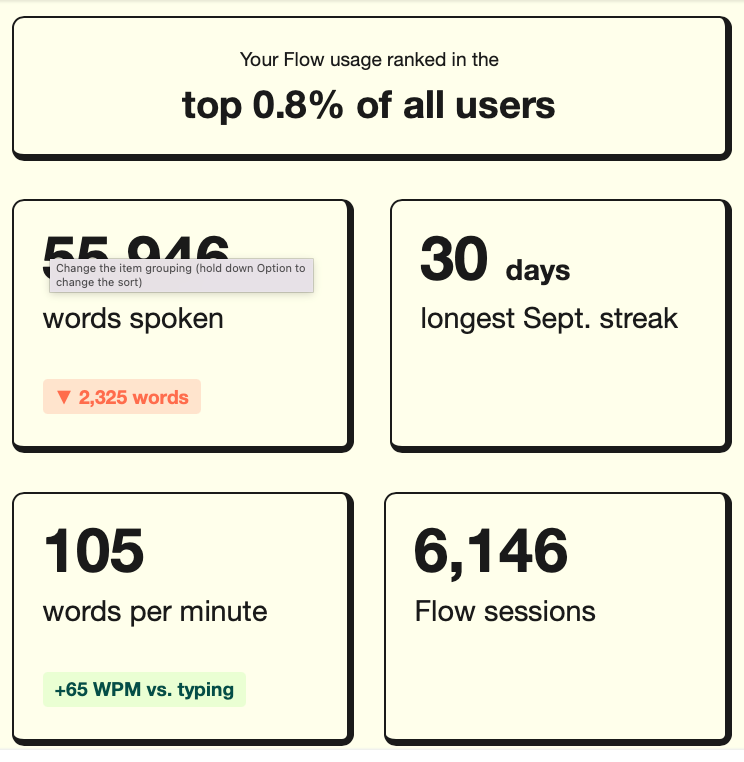
My favorite new app is Wispr Flow, and as you’ll see in the images below, I’m using it 8 hours a day, 7 days a week. I dictate over 100 words a minute using it. It is easy to learn.
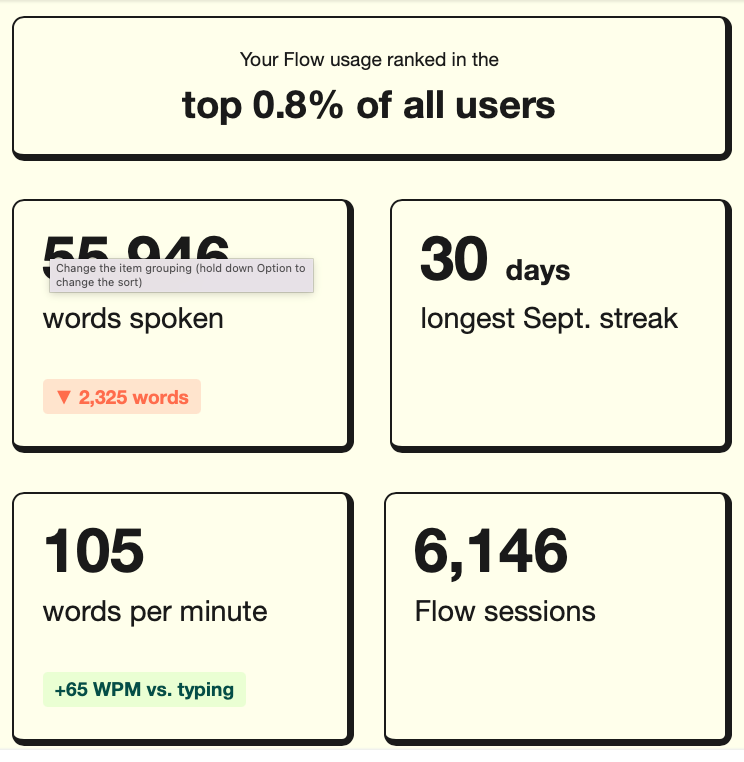
I use Wispr Flow all day, every day, and this must save me three-quarters of my editing time. I was struggling with one of its competitors, but when I started Wispr, I liked it so much that I bought a year’s membership for $144.
These programs, with their modest monthly charges, work as well as DragonDictate, the former gold standard. This used to cost about $800.
I have an affiliate link HERE for you to use when you buy—and if you do a lot of writing, you need it. Your price is the same as if you searched for the website and bought it without using the link. You are going to love this thing.