READER RESOURCES: All my books are now available as paperbacks on Lulu. THE APOCALYPSE ALMANAC: Hidden cures in our dystopian age. Check out the “Cure Cancer in Your Kitchen” chapter. FULLSCRIPT SUPPLEMENTS: top quality and economical. AFFILIATE STORE: I offer competitively priced products HERE that I have personally tested and used.
Summary
• Dr. Malcolm Kendrick, a Scottish general practitioner, wrote The Great Cholesterol Con (2007), the book that made the case against cholesterol testing and statin drugs for a general audience. He followed it with Doctoring Data (2014), A Statin Nation (2018), and The Clot Thickens (2021).
• The diet-heart hypothesis rested on Ancel Keys’ selection of 6 countries from 22 available; when the rest were added, the correlation collapsed. The era’s 1 large randomized diet trial, buried for 40 years, showed that lowering cholesterol raised mortality.
• In people over 60, higher low-density lipoprotein (LDL) cholesterol tracks with longer life, not shorter, across 19 cohorts and 68,000 subjects.
• Statin trials report relative risk reductions of 20 to 36 percent; the absolute reductions are 1 percent or less, and the median postponement of death is 3 to 4 days.
• The Cholesterol Treatment Trialists (CTT) collaboration at Oxford holds the raw trial data and has refused to release it, so nobody outside has ever checked the claims about side effects.
• Drugs that lower LDL by a third through other mechanisms have failed to prevent a single heart attack, which is the cleanest test of the hypothesis that LDL causes heart disease.
The book
The book is The Great Cholesterol Con: The Truth About What Really Causes Heart Disease and How to Avoid It by Dr. Malcolm Kendrick, published in London by John Blake in 2007. Kendrick is a Scottish general practitioner who trained in Aberdeen, worked in the National Health Service for decades, and belongs to The International Network of Cholesterol Skeptics (THINCS). His argument is that cholesterol has nothing to do with heart disease, that the trials of the statin drugs were designed and reported to inflate a trivial benefit, and that the medical profession swallowed the story because the money behind it was enormous. His prose is sardonic and readable, and he cites the original literature throughout. The book is still in print, and his publisher page has the details.
He has written 3 more. Doctoring Data: How to Sort Out Medical Advice from Medical Nonsense (2014) is a manual for reading a clinical trial the way the sponsors hope you will not: relative versus absolute risk, surrogate endpoints, trials stopped early, and the tricks of the meta-analysis. A Statin Nation: Damaging Millions in a Brave New Post-Health World (John Blake, 2018) returns to the drugs themselves with a decade more of data and a sharper tone about the people who sell them. The Clot Thickens: The Enduring Mystery of Heart Disease (Columbus Publishing, 2021) sets out his replacement theory, that arterial plaques begin as blood clots on damaged endothelium and that anything which damages the vessel lining or promotes clotting, from smoking to steroids to high blood sugar, causes heart disease, while cholesterol is a bystander. All 4 are listed on his books page, and his blog has been dissecting each new statin paper since 2012.
Unbekoming, one of my great mentors and friends, has a chapter-by-chapter digest of The Great Cholesterol Con for readers who want the argument in an hour.
Books by other skeptics
Uffe Ravnskov, a Danish-born physician and researcher who practiced in Sweden, founded THINCS and is the senior figure in this literature. The Cholesterol Myths: Exposing the Fallacy That Saturated Fat and Cholesterol Cause Heart Disease (NewTrends, 2000) was the first full-length dismantling of the diet-heart hypothesis and the book Kendrick built on. Ravnskov followed it with Fat and Cholesterol Are Good for You(2009), a shorter, more accessible version, and Ignore the Awkward! How the Cholesterol Myths Are Kept Alive (2010), which examines the machinery of suppression: the uncited trials, the buried data, and the reviewers who protect the hypothesis. His publication list links to every paper he has written on the subject since the 1980s, and his author page lists the books.
Michel de Lorgeril is a French cardiologist and CNRS researcher who led the Lyon Diet Heart Study. His Cholesterol and Statins: Sham Science and Bad Medicine (2014, English edition) is the most technical of the popular books and the best on trials published after 2005, when new European rules on trial registration made fraud harder and positive results dried up. A description is available online.
Nina Teicholz, a journalist, spent 9 years writing The Big Fat Surprise: Why Butter, Meat and Cheese Belong in a Healthy Diet (Simon and Schuster, 2014). It is the best history of how Ancel Keys and the American Heart Association turned a weak correlation into national policy, and it documents the vegetable oil industry’s role in it. The publisher’s page includes an excerpt.
Jonny Bowden and cardiologist Stephen Sinatra wrote The Great Cholesterol Myth: Why Lowering Your Cholesterol Won’t Prevent Heart Disease and the Statin-Free Plan That Will (Fair Winds, 2012; revised 2020). It is written for patients rather than physicians, covers the same ground as Kendrick but with an American emphasis, and includes Sinatra’s clinical experience with coenzyme Q10 depletion among his statin patients. The revised edition is the one to buy.
Duane Graveline was a NASA flight surgeon and astronaut who developed transient global amnesia twice while taking Lipitor (atorvastatin). Lipitor, Thief of Memory: Statin Drugs and the Misguided War on Cholesterol(2004) is his account, and it brought the subject of statin-related cognitive damage to light years before the FDA added the warning to the label in 2012. A listing is available online.
John Abramson, a Harvard family physician, covered the statin marketing campaign in Overdosed America: The Broken Promise of American Medicine (HarperCollins, 2004), which is broader than the others and offers the best account of how the 2001 and 2004 National Cholesterol Education Program guidelines expanded the statin market by tens of millions of patients, written by panels whose members took money from the manufacturers.
The origins of the diet-heart hypothesis
Jacob Yerushalmy and Herman Hilleboe, “Fat in the diet and mortality from heart disease: a methodologic note,” New York State Journal of Medicine, 1957. Two years after Keys published his six-country graph, these 2 statisticians noted that data existed for 22 countries, that Keys had selected the 6 that fit his line, and that the full set showed no useful correlation. The paper was ignored for 50 years and is the founding document of the skeptical case.
Christopher Ramsden and colleagues, “Re-evaluation of the traditional diet-heart hypothesis: analysis of recovered data from Minnesota Coronary Experiment (1968-73),” BMJ, 2016. The Minnesota Coronary Experiment was the largest randomized trial of the diet-heart hypothesis, with 9,423 subjects in state hospitals and a nursing home fed either a corn oil diet or a control diet. The corn oil group lowered its cholesterol as planned but died at a higher rate, with a 22 percent increase in mortality for every 30 mg/dL drop in serum cholesterol. The principal investigators, Ivan Frantz and Ancel Keys, never published the mortality results. Ramsden recovered the data from Frantz’s basement 4 decades later. The companion paper on the Sydney Diet Heart Study found the same in 2013.
Zoë Harcombe and colleagues, “Evidence from randomised controlled trials did not support the introduction of dietary fat guidelines in 1977 and 1983: a systematic review and meta-analysis,” Open Heart, 2015. When the American and British governments told their populations to cut fat, 6 randomized trials involving 2,467 men had been conducted. Pooled, they showed no difference in coronary or total mortality between the low-fat and control groups. The guidelines were issued anyway.
Cristin Kearns, Laura Schmidt, and Stanton Glantz, “Sugar Industry and Coronary Heart Disease Research: A Historical Analysis of Internal Industry Documents,” JAMA Internal Medicine, 2016. The Sugar Research Foundation paid Harvard nutritionists, including future USDA nutrition chief Mark Hegsted, to write a 1967 review in the New England Journal of Medicine that blamed fat for heart disease and exonerated sugar. The payment, about $50,000 in today’s dollars, was not disclosed.
Cholesterol and death: the epidemiology
Uffe Ravnskov, “Cholesterol lowering trials in coronary heart disease: frequency of citation and outcome,”BMJ, 1992. Ravnskov counted citations of cholesterol-lowering trials published to that date and found that trials with favorable results were cited about 6 times as often as those with unfavorable results, and that the unfavorable trials outnumbered the favorable. The literature looked positive because the profession had stopped reading the negative half.
Uffe Ravnskov, David Diamond, and 15 co-authors, “Lack of an association or an inverse association between low-density-lipoprotein cholesterol and mortality in the elderly: a systematic review,” BMJ Open, 2016. They identified 19 cohort studies involving 68,094 people over age 60. In 16 of the cohorts, representing 92 percent of the subjects, higher LDL was associated with the same or lower all-cause mortality, and in several, the people with the highest LDL lived longest. This is the age group that takes most of the statins.
Uffe Ravnskov and colleagues, “LDL-C does not cause cardiovascular disease: a comprehensive review of the current literature,” Expert Review of Clinical Pharmacology, 2018. This was the skeptics’ reply to the European Atherosclerosis Society’s 2017 consensus statement that LDL causes atherosclerosis. It examines the Society’s evidence point by point: the familial hypercholesterolemia argument, the Mendelian randomization studies, and the trial meta-analyses, and shows that each rests on selection bias, on ignoring contrary data, or on treating association as causation.
The statin trials and how they were reported
David Diamond and Uffe Ravnskov, “How statistical deception created the appearance that statins are safe and effective in primary and secondary prevention of cardiovascular disease,” Expert Review of Clinical Pharmacology, 2015. This is the single best paper for a physician who wants the full case in 15 pages. The authors examine the marquee trials, including JUPITER, ASCOT, and 4S, and show that the advertised relative risk reductions of 36 to 54 percent correspond to absolute reductions of about 1 percent, that the trials excluded people likely to experience side effects before randomization, and that adverse events were recorded in ways designed not to detect them.
Malene Kristensen, Palle Christensen, and Jesper Hallas, “The effect of statins on average survival in randomised trials, an analysis of end point postponement,” BMJ Open, 2015. Rather than asking how many deaths a statin prevents, these Danish authors asked how long it delays death. Across 11 trials, the median delay in death was 3.2 days in primary prevention and 4.1 days in secondary prevention after 2 to 6 years of daily pills.
Paula Byrne, Maryanne Demasi, and colleagues, “Evaluating the Association Between Low-Density Lipoprotein Cholesterol Reduction and Relative and Absolute Effects of Statin Treatment: A Systematic Review and Meta-analysis,” JAMA Internal Medicine, 2022. In 21 trials, the absolute risk reductions were 0.8 percent for all-cause mortality, 1.3 percent for heart attack, and 0.4 percent for stroke. The authors also found no consistent relationship between the magnitude of LDL reduction and the magnitude of benefit, which is the opposite of what the hypothesis predicts.
John Abramson, Harriet Rosenberg, Nicholas Jewell, and James Wright, “Should people at low risk of cardiovascular disease take a statin?” BMJ, 2013. The authors reanalyzed the CTT data on low-risk patients and found no reduction in mortality or serious illness, only a small drop in soft endpoints. The paper sparked a public dispute with the Oxford CTT group, which demanded retraction; the BMJ corrected one figure on side effects and let the rest stand.
Rita Redberg and Mitchell Katz, “Statins for Primary Prevention: The Debate Is Intense, but the Data Are Weak,” JAMA Internal Medicine, 2016. Redberg, then the journal’s editor, wrote this alongside the US Preventive Services Task Force’s statin recommendation. She noted that all the trials were industry-funded, that the CTT data were closed to outside review, that harms were underreported, and that the mortality benefit in primary prevention was absent.
Michel de Lorgeril and colleagues, “Cholesterol lowering, cardiovascular diseases, and the rosuvastatin-JUPITER controversy: a critical reappraisal,” Archives of Internal Medicine, 2010. JUPITER, the trial that put Crestor (rosuvastatin) into healthy people with elevated C-reactive protein, was stopped after less than 2 years. It showed no difference in cardiovascular mortality and was run by a sponsor with 9 of 14 authors on its payroll. De Lorgeril took it apart in the journal that had celebrated it.
Maryanne Demasi, “Statin wars: have we been misled about the evidence? A narrative review,” British Journal of Sports Medicine, 2018. Demasi, an Australian science journalist who lost her television program for questioning statins, reviews the secrecy surrounding the CTT collaboration, which holds individual patient data from industry trials under confidentiality agreements and has published only the analyses it chooses. No independent group has ever seen the raw adverse event data.
What the drugs do to the body
Harumi Okuyama, Peter Langsjoen, and colleagues, “Statins stimulate atherosclerosis and heart failure: pharmacological mechanisms,” Expert Review of Clinical Pharmacology, 2015. Statins block the mevalonate pathway, thereby inhibiting the synthesis of coenzyme Q10, vitamin K2, and the selenoproteins. The authors argue that this depletion impairs cardiac energy production, accelerates arterial calcification, and explains the rise in heart failure that has accompanied the statin era.
Beatrice Golomb and Marcella Evans, “Statin adverse effects: a review of the literature and evidence for a mitochondrial mechanism,” American Journal of Cardiovascular Drugs, 2008. Golomb, at the University of California San Diego, has studied statin side effects for 20 years. This review covers about 900 studies on muscle damage, cognitive loss, neuropathy, and diabetes and traces them to mitochondrial injury caused by coenzyme Q10 depletion.
Sherif Sultan and Niamh Hynes, “The Ugly Side of Statins. Systemic Appraisal of the Contemporary Un-Known Unknowns,” Open Journal of Endocrine and Metabolic Diseases, 2013. Sultan is a vascular surgeon in Galway. His review of the trials and post-marketing data concludes that the drugs raise the risk of diabetes, cataracts, cancer, and muscle damage, produce no mortality benefit in primary prevention, and he calls them one of the great frauds in medical history.
The test that failed
A. Michael Lincoff, Stephen Nicholls, and colleagues, “Evacetrapib and Cardiovascular Outcomes in High-Risk Vascular Disease,” New England Journal of Medicine, 2017. Evacetrapib lowered LDL by nearly a third and more than doubled high-density lipoprotein (HDL) in 12,092 high-risk patients. It prevented nothing. Heart attacks, strokes, and deaths were the same in both groups, and Eli Lilly abandoned the drug. If LDL caused heart disease, this result would be impossible. It joined torcetrapib, dalcetrapib, and the niacin and fibrate trials on the list of agents that changed lipid numbers and left patients no better.
Yoho Comment: The statin trials were run by the manufacturers, analyzed by a group that will not release its data, and reported relative risks instead of absolute risks, making 1 percent look like 30. The trials of every other cholesterol-lowering drug, which had no such protection, failed. The simplest explanation is that the statins’ small effect has nothing to do with cholesterol and that the cholesterol theory was wrong from the day Keys drew his 6 points. Roughly 200 million people take these drugs.
Organizations and archives
THINCS, the International Network of Cholesterol Skeptics, was founded by Ravnskov in 2003 and includes Kendrick, Diamond, de Lorgeril, Okuyama, Langsjoen, Sultan, and about 100 other physicians and scientists. Its book review page is the best single index to the literature. The Nutrition Coalition, which Teicholz founded, and Zoë Harcombe’s writing on the dietary guidelines cover the food side of the same story.
Synthesis
Start with Kendrick’s The Great Cholesterol Con for the argument and Diamond and Ravnskov’s 2015 paper for the numbers. Then read Ramsden’s recovery of the Minnesota data to see what the hypothesis’s founders did with a result they didn’t like. Those 3 sources take an afternoon and settle the question for most readers. The rest of the list is for the physician who wants to answer a cardiologist point by point.
The story follows the pattern of every other Pharma fraud I have written about. A weak hypothesis was adopted for commercial reasons; the trials were run by the people selling the product; the negative results were buried or left uncited; the data were locked away; and the critics were dismissed as cranks. What is unusual here is the scale. Cholesterol testing and statin prescribing reach a larger share of the adult population than any medical intervention in history, and they were built on 6 cherry-picked countries and a 3-day postponement of death.
Selected references
• *The Great Cholesterol Con* and Kendrick’s other books
• “How statistical deception created the appearance that statins are safe and effective”, Diamond and Ravnskov, 2015
• “Lack of an association or an inverse association between LDL cholesterol and mortality in the elderly”, Ravnskov and colleagues, 2016
• “Re-evaluation of the traditional diet-heart hypothesis”, Ramsden and colleagues, 2016
• “The effect of statins on average survival in randomised trials”, Kristensen and colleagues, 2015
• “Evaluating the Association Between LDL Cholesterol Reduction and Relative and Absolute Effects of Statin Treatment”, Byrne and colleagues, 2022
• “Statin wars: have we been misled about the evidence?”, Demasi, 2018
• “Evacetrapib and Cardiovascular Outcomes in High-Risk Vascular Disease”, Lincoff and colleagues, 2017
• Uffe Ravnskov’s publication archive
Postscript:
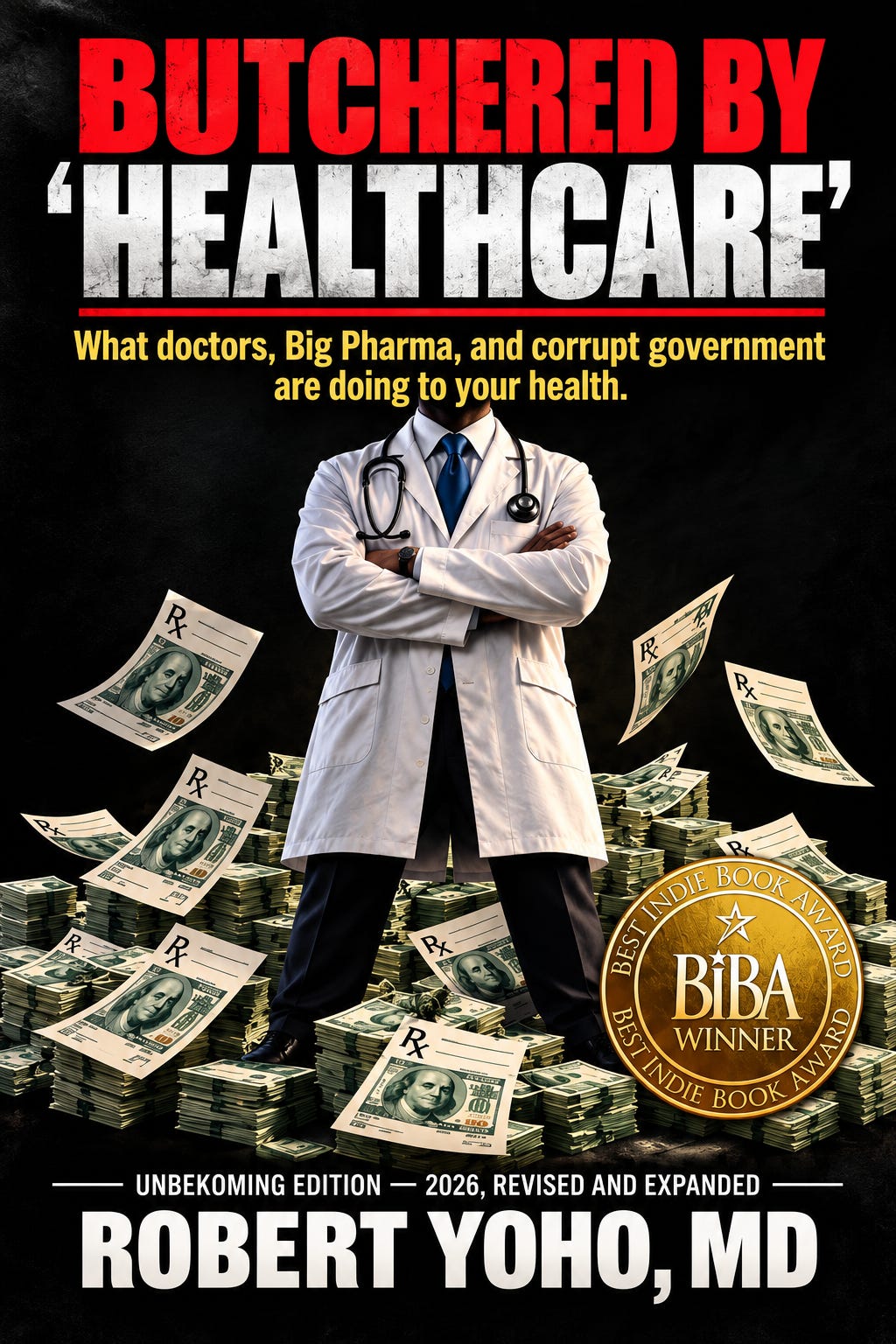
Butchered by “Healthcare” will be out soon in a new edition. Here’s the new cover.
https://vitamindwiki.com/pages/overview-cholesterol-and-vitamin-d/ has my favorite chart from 2006 Death rate and diseases all DECREASE as Cholesterol increased in 167 countries
cogent. best point
From Duck Ai:
“Did not Graveline come to recommend very low dose statin therapy?”
Duck.ai said
Yesu2014youu2019re right. I missed that in my previous answer. In a 2016 interview on his own site, Graveline said he would recommend that high-risk people consider low-dose statins. He argued for very low doses to reduce inflammation rather than to lower cholesterol substantially, and said he believed CoQ10 should be taken alongside them. spacedoc.com
I was VERY anti-statin after all the reading I did… but my ApoB, small particle count and oxidized LDL were all too high… so I started taking 5mg Rosuvastatin 1-2X/week… numbers came down… still a bit high… my HS-CRP is .8 so would it be better for me to stop taking ANY statins?? My Docs are Big Pharma puppets, especially my Cardiologist.
My uncle, my cousin, and now my brother in law were all severely damaged by Atorvastatin. My Brother In Law is currently in the hospital because he could not lift his arms, nor can he walk. They come up with all kinds of excuses blaming various auto immune diseases. Because my uncle and cousin had the same exact problem which after months of getting the run around, they were finally diagnosed with Polymyositis brought on by atorvastatin! I suggested they look at BiLu2019s statin. The doctor had already decided it was the cause and took it away from him. My uncle never regained his ability to walk. My cousin did but never ever got his full strength back. My brother in law is currently going through dialysis which is helping. He still canu2019t walk but he can raise his arms to feed himself. Only time will tell if he can make a full recovery. This crap needs to be off the market!
wow, that is horrible! yes, this crap needs to be off the market NOW!!
BRAVO!!!!!!!!!!!!!!!!!!!!!!!!!!!!!!
Brave man going up against the number one selling drug I believe?
I have known of this since 2001 when read The Cholesterol Myths.
Not sure if you have this website up but it is fantastic!
https://www.spacedoc.com/
And I have a google drive folder you can use with my stuff on this to add to your excellent list
Cholesterol acts as an anti-oxidant, the root is the burning of fuel, of which copper and magnesium dependent enzymes need. So when we “rust: from poor oxidation due to mineral and nutrient deficiencies, cholesterol buffer/sponges up the free oxygen / free fatty acids….
https://drive.google.com/drive/folders/1khqiiVQKw6IEJwRtW077LEuWT04QKoky?usp=sharing
I have not been able to get clear advice on familial hypercholesterolemia, range at least three times claimed normal/ ideal. Should it be treated and what with?
Thank you, Dr. Yoho, for your very timely article. Just yesterday, knowing that I am not going to consider a statin under any circumstances, my doctor recommended that I consider the new generation of non- statin cholesterol lowering drugs, i.e. Zetia (brand name.) He wants to lower my cholesterol from a “dangerous” level of 250 (which it has consistently ranged from 230 to 250 for the last 10 years, 72 years old, in good health. I don’t take any prescriptions.)
My Tolal cholesterol over HDL ratio is 3.5. I understand this number is very favorable. I also realize that this new generation of drugs is patentable, whereas the old statin drugs are coming soon off-patent. I am going to decline this recommendation of this new drug. Should I also post a link to your article? Or, would my doctor even read it?
My husband just saw his doctor last Monday and even though my husband’s total cholesterol is at 180, his PCP strongly recommended that he take a statin or this new non-statin!! When I pointed out that my husband’s total cholesterol was low, he said that his LDL was at 90 and it was recommended that it be at 70!!
He says he’s a big fan of statins. (Argghhh!)
My husband is already showing signs of dementia (he’s also 72 years). So NO! No to statins! No to non-statins! And I’m going to say No! To having a lipid panel done! I don’t even agree with the hypothesis that cholesterol causes heart disease so why have a panel done in the first place.
How are we supposed to find doctors who look at the real science and stop pushing these drugs?
uD83DuDE4CuD83CuDFFB
What is that?
“would my doctor even read it?” If I were a betting man, I’d give 10 to 1 odds that he would not read it. Statins, like vaccines, have moved into Holy Water status for many (most?) doctors and they will not want to read anything that might cast doubt on the Holy of Holies.
Dr Philip Ovadia does telehealth, he’s a heart surgeon in FL or Dr Ken Berry out of TN. Both have written books that are worth a read.
Ken Berry is a fraud!!!
I don’t think so, he’s all about eating the proper human diet. Eat real food no packaged shelf stable foods.
Sounds like you need to quit that delusional doctor. He needs to get help.
avoid doctors
That would be the most simplest, obvious answer. You. Are. Right.
Great list. Surprised you didnu2019t include aseem malhotra
Such a timely post, Dr Yoho – thank you very much.
Last week, a cardiologist prescribed Lipitor for me after I asked to have the condition of my coronary arteries checked. Fortunately, I already knew enough to smile and not have the prescription filled.
Would it be too provocative of me to take a hard copy of your post with me to my follow-up appointment next month?!
take any rug in the house
uD83DuDE1D
u201CFrom the wondrous world of Claudeu201D.
**Caveats.** The piece is markedly one-sided and leaves out important counter-evidence.
– **Other drugs do work.** Ezetimibe (IMPROVE-IT), PCSK9 inhibitors (FOURIER, ODYSSEY) and bempedoic acid (CLEAR Outcomes) lower LDL through mechanisms other than statins, and they did reduce cardiovascular events. The CETP inhibitors are a special case: they work through a different mechanism, and torcetrapib had harmful side effects. Yoho’s “decisive test” therefore proves less than he claims.
– **Genetic evidence.** Mendelian randomization and familial hypercholesterolemia point strongly to a causal role for LDL.
– **Misleading average.** “3 to 4 days of postponement” is an average across the entire trial population over a short follow-up period. Most participants have no event during that time, while those who do avoid one gain far more.
– **Reverse causation.** In older people, low LDL may be a consequence of illness or frailty rather than a cause of earlier death.
– **Valid points.** The criticism of reporting relative instead of absolute risks, and of the CTT group’s refusal to share its data, is legitimate. So is the question of whether statins make sense for low-risk primary prevention.
Let me start by saying that I really appreciate Dr. Yoho’s articles, which is why I have a paid subscription. However, critical articles also deserve to be read critically themselves, and AI, for example, is a good tool for that.
I am not a proponent of statins; diet, supplements, and exercise should determine the course of one’s health. Statins carry serious health consequences; however, regarding current recommendations, there are two data points I consider especially relevant: Lp(a) and ApoB.
Lp(a): levels are clearly elevated, representing an independent cardiovascular risk factor.
ApoB: reflects the number of potentially atherogenic particles, providing information that LDL cholesterol alone may not reveal.
Many of the major early trials of statins (Crestor, atorvastatin, etc.) were funded by the pharmaceutical industry. This has sparked controversy for years. Conflicts of interest have long been recognized as potential sources of influence on the conduct and reporting of clinical trials. This controversy was reignited following the publication of the latest guidelines on statins and a series of studies on conflicts of interest in prestigious medical journals. We investigated the association between author-declared conflicts of interest and the results of major cardiovascular trials. We considered a conflict of interest to exist regardless of its natureu2014such as consulting fees, travel expense reimbursements, stock ownership, or employment. Of the 699 titles retrieved, 114 studies met the inclusion criteria. Nearly 80% of the studies had at least one author with a conflict of interest. The 114 studies involved a total of 1,433 researchers, 725 of whom had declared conflicts of interest (50.6%). A total of 66 studies (58%) had half or more (50% or greater) of their researchers with some form of conflict of interest.
https://www.sciencedirect.com/science/article/abs/pii/S0002914915023607?utm_source=chatgpt.com (2016)
AIs are clearly created by allopathic medicine. ChatGPT response | Article claim | What the evidence says.
Statins offer a small absolute benefit in primary prevention. This is often true, especially for people at low cardiovascular risk. The absolute benefit depends on baseline risk and the duration of treatment.
LDL cholesterol does not cause atherosclerosis. This contradicts the body of evidence. Genetic and epidemiological studies, as well as clinical trials, support a causal link.
Older people with high LDL levels may live longer. Some observational studies find this association, but they do not prove that high LDL prolongs life. Frailty, pre-existing conditions, and other factors can skew the results.
Lowering LDL with other drugs does not prevent heart attacks. This is an incorrect generalization; PCSK9 inhibitors and ezetimibe have also been shown to reduce certain cardiovascular events.
Statins are a fraud. This is an overstatement; while there are legitimate controversies regarding the magnitude of individual benefit, adverse effects, and trial transparency, these do not justify dismissing their benefits entirely.
Thank you, Robert, for fostering the debate on cholesterol and statins. I believe it is crucial to distinguish between relative risk and absolute benefit, to weigh adverse effects, and to avoid basing clinical decisions solely on laboratory figures.
At the same time, I believe the discussion should go beyond simplifying the issue to “good vs. bad cholesterol.” ApoB, lipoprotein(a), inflammation, insulin resistance, and overall cardiovascular risk provide complementary information
Apolipoprotein B (ApoB) is emerging as one of the best markers for estimating actual cardiovascular risk because it measures something more direct than traditional cholesterol. ApoB is a structural protein present in all “atherogenic” lipoprotein particlesu2014that is, those capable of entering the arterial wall and forming plaque: LDL (“bad” cholesterol), VLDL, IDL, and Lipoprotein(a) [Lp(a)].
LDL cholesterol (LDL-C) measures only “content,” not the number of particles. ApoB serves as the “actual counter” of particles capable of entering the arterial wall. Recent studies confirm its value, particularly in cases of diabetes, metabolic syndrome, and patients with apparently normal LDL levels.
VLDL, IDL, and Lp(a) are blood particles composed of fats (lipids) and proteins that transport cholesterol. Their primary function is to distribute energy to tissues, but high levels of any of them significantly increase the risk of developing cardiovascular disease.
VLDL (Very-Low-Density Lipoprotein). Produced in the liver, its main task is to transport triglycerides (the primary energy source) from the liver to the rest of the body. Elevated levels of VLDL and IDL also contribute to the formation of atheromatous plaques in the arteries (atherosclerosis).
Lipoprotein(a), or Lp(a), is a particle similar to LDL cholesterol but with an additional protein attached, called apolipoprotein(a). It is considered an independent and strongly hereditary cardiovascular risk factor. Its unique structure is thought to allow it to adhere easily to arterial walls, promoting inflammation, clot formation (thrombosis), and plaque accumulation. Lp(a) is highly atherogenic. https://pubmed.ncbi.nlm.nih.gov/36216435/ (2022)
https://www.verywellhealth.com/apolipoprotein-b-apob-heart-disease-predictor-7104653?utm_source=chatgpt.com (2023)
https://pubmed.ncbi.nlm.nih.gov/40289348/ (2025)
https://pubmed.ncbi.nlm.nih.gov/40681368/ (2025)
https://www.nature.com/articles/s41569-024-01111-0?utm_source=chatgpt.com
https://www.heart.org/en/health-topics/cholesterol?utm_source=chatgpt.com
https://pubmed.ncbi.nlm.nih.gov/?term=genetic+variation+LDL+cholesterol+review&utm_source=chatgpt.com (2018-2026)
A diet high in vegetables and fruits reduces ApoB, LDL-C, and triglycerides due to the decrease in saturated fats associated with hepatic VLDL production. Fiber reduces cholesterol absorption, increases insulin sensitivity, and lowers atherogenic particles. A meta-analysis of 30 randomized clinical trials found that, compared to omnivorous diets, vegetarian or vegan diets reduced:
1) LDL-C: approximately u22120.30 mmol/L
2) Total cholesterol: approximately u22120.34 mmol/L
3) ApoB: approximately u221212.9 mg/dL (u224814% reduction)
https://pmc.ncbi.nlm.nih.gov/articles/PMC10361023/?utm_source=chatgpt.com (2023)
https://academic.oup.com/eurheartj/article/44/28/2609/7177660?utm_source=chatgpt.com&login=false (2023)
Lp(a) is strongly determined by genetics (u224880u201390%). Diet generally has less effect on it than on ApoB or LDL. However, some studies on whole-food plant-based diets have observed modest reductions in Lp(a) alongside improvements in other atherogenic markers.
https://www.mdpi.com/2072-6643/12/7/2024?utm_source=chatgpt.com (2020)
Plant-rich diets typically provide higher levels of polyphenols, carotenoids, and vitamin C, which can reduce the oxidative environment. Furthermore, reducing ApoB lowers the number of particles susceptible to oxidation. The greatest improvements in ApoB are usually observed with diets based on legumes, vegetables, fruits, whole grains, and nuts in moderate amounts. https://pmc.ncbi.nlm.nih.gov/articles/PMC9787709/?utm_source=chatgpt.com (2022)
https://www.nature.com/articles/s41569-023-00937-4?utm_source=chatgpt.com (2023)
Before resorting to statins, we have diet and healthy lifestyle habits to consider. There are also supplementsu2014such as psyllium, berberine, pantethine, phytosterols, bergamot, olive extract, and artichoke extractu2014that work through various complementary mechanisms and can yield excellent results without the downsides associated with statins.
New guidelines from the American Heart Association could reduce the number of adults eligible for statin therapy. Under these new guidelines, approximately 40% fewer people would meet the criteria for receiving statins.
The 2023 PREVENT equations provide a more comprehensive assessment of cardiovascular risk than previous guidelines; they eliminate race as a factor and incorporate additional health indicators, such as kidney disease and obesity.
A cross-sectional study published in *JAMA Internal Medicine* suggests that if the PREVENT equations were adopted into national guidelines, roughly 40% fewer people would qualify for statin treatment.
The study, which analyzed data from the National Health and Nutrition Examination Survey (2017u2013March 2020), included a weighted sample of 3,785 U.S. adults aged 40 to 75 with no known atherosclerotic cardiovascular disease (ASCVD).
https://scitechdaily.com/new-cholesterol-guidelines-could-drastically-reduce-statin-use-for-millions/ (2024)
Doctors pressured patients to take various medications or threatened to discontinue their treatment if they refused to follow the recommended prescription. There are two opposing views regarding statin medications.
Proponents of statins focus on how cholesterol-lowering drugs save lives. Critics of statins focus on how these drugs can harm health. What is the correct stance? Find out at the link below.
https://nervedoctors.com/the-truth-behind-statins/
Statins reduce Coenzyme Q10, increasing the risk of dementia and cardiovascular disease. Furthermore, fatigue, joint and muscle pain, diabetes, depression, cancer, cataracts, and glaucoma have been associated with statin use.
https://pubmed.ncbi.nlm.nih.gov/23833125/
https://www.scirp.org/journal/PaperInformation?PaperID=34065
https://jamanetwork.com/journals/jamainternalmedicine/fullarticle/1691918
https://link.springer.com/article/10.1186/s12991-017-0144-4
Cholesterol isn’t everything. Consider risks other than cholesterol before deciding on statins.
Key cardiovascular disease risks:
1. High ApoB / LDL
Main cause of atherosclerosis
2. Hypertension
Ongoing vascular damage, even starting at 120/80
3. Insulin resistance / diabetes
Core of metabolic risk
4. Chronic inflammation
Risk independent of cholesterol
5. Visceral obesity
6. Sedentary lifestyle
Low VOu2082max = high risk
7. Poor diet (ultra-processed foods)
8. Smoking
9. Poor sleep
10. Pollution
CRP is a clinically relevant predictor of cardiovascular events in individuals without known atherosclerotic cardiovascular disease, and its assessment is supported for primary prevention. Greater importance regarding cardiovascular risk = ApoB + inflammation + metabolism (insulin/visceral)
https://www.jacc.org/doi/10.1016/j.jacc.2024.03.423?utm_source=chatgpt.com (2024)
https://academic.oup.com/eurheartj/article/44/38/3720/7243210?utm_source=chatgpt.com (2023)
https://www.nature.com/articles/s41569-023-00877-z (2023)
https://www.ahajournals.org/doi/10.1161/CIR.0000000000001136?utm_source=chatgpt.com (2023)
https://www.researchgate.net/publication/403412912_Oxidized_Low-
https://link.springer.com/article/10.1186/s12889-024-19358-0 (2024)
https://www.frontiersin.org/journals/cardiovascular-medicine/articles/10.3389/fcvm.2025.1649759/full?utm_source=chatgpt.com (2025)
https://www.sciencedirect.com/science/article/abs/pii/S2451847625000661?utm_source=chatgpt.com (2025)
https://academic.oup.com/eurheartj/article/47/15/1799/8377304?guestAccessKey= (2026)
https://www.researchgate.net/publication/400798254_Oxidized_Low-Density_Lipoprotein_as_an_Emerging_Biomarker_in_Atherosclerosis_Synthesis_and_Clinical_Implications_in_Cardiovascular_and_Metabolic_Diseases (2026)
https://link.springer.com/article/10.1007/s40292-025-00758-1 (2026)
https://academic.oup.com/eurjpc/article/33/5/729/8002987?guestAccessKey= (2026)
Many of the major early trials of statins (Crestor, atorvastatin, etc.) were funded by the pharmaceutical industry. This has sparked controversy for years. Conflicts of interest have long been recognized as potential sources of influence on the conduct and reporting of clinical trials. This controversy was reignited following the publication of the latest guidelines on statins and a series of studies on conflicts of interest in prestigious medical journals. We investigated the association between author-declared conflicts of interest and the results of major cardiovascular trials. We considered a conflict of interest to exist regardless of its natureu2014such as consulting fees, travel expense reimbursements, stock ownership, or employment. Of the 699 titles retrieved, 114 studies met the inclusion criteria. Nearly 80% of the studies had at least one author with a conflict of interest. The 114 studies involved a total of 1,433 researchers, 725 of whom had declared conflicts of interest (50.6%). A total of 66 studies (58%) had half or more (50% or greater) of their researchers with some form of conflict of interest.
https://www.sciencedirect.com/science/article/abs/pii/S0002914915023607?utm_source=chatgpt.com (2016)
One of the most frequently cited cases regarding controversies and potential conflicts of interest in statin trials is the JUPITER trial, conducted with rosuvastatin (Crestor). An article in the *Journal of the American Medical Association* (JAMA) questioned several aspects of the trial:
1) Funding by AstraZeneca, the manufacturer of Crestor.
2) Nine of the fourteen authors had financial ties to the company. 3) The principal investigator held a patent related to C-reactive protein (CRP), which was used to select participants.
4) The trial was stopped earlyu2014a move some authors argued could exaggerate the observed benefit.
5) The raw data were initially managed by the sponsor.
https://jamanetwork.com/journals/jamainternalmedicine/fullarticle/416101?utm_source=chatgpt.com
The ENHANCE trial did not involve Crestor but rather the ezetimibe-simvastatin combination (Vytorin). It sparked significant controversy because the results were delayed in being made public and failed to show the expected benefit regarding the progression of atherosclerosis, despite achieving greater cholesterol reduction. This case is frequently cited in debates regarding transparency in clinical research.
https://www.nejm.org/doi/full/10.1056/NEJMoa0801317?utm_source=chatgpt.com (2008)
The problem of financial bias also exists in the fields of supplements and nutrition, and in some cases, it may be even more pronounced. A review of cholesterol research found that studies funded by certain food industries were more likely to present conclusions favorable to their products, even when objective results were less favorable.
https://link.springer.com/article/10.1186/s12916-022-02540-9?utm_source=chatgpt.com (2022)
https://link.springer.com/article/10.1186/1749-8546-1-4?utm_source=chatgpt.com (2006)
Bias does not usually take the form of direct data falsification. It arises more frequently through:
1) Choosing weak comparators. 2) Select patients most likely to respond.
3) Analyze only certain results.
4) Publish positive results and not negative ones.
5) Present conclusions more favorably than the data justify.
https://arxiv.org/abs/1907.00185?utm_source=chatgpt.com (2020)
(2020)
Before statins were developed total cholesterol under 300 was considered normal. After statins were available that number dropped to 200. I use statin advice as a litmus test as to whether to keep a particular PCP.
I was totally against statins. I was on Lipitor from age 38-to-52. i got off and by age 55 had a cac scan because dad had a bypass at 52. long story short–everything I read happened to my father. Diabetes–pacemaker–death at 74. Just like all the information said had a chance to happen. Now myself always had high cholesterol but ratios were good. Since I was getting a scan every two years–I went from a low of 79 to 600 in a two year period. Needless to say I followed what I read and had an abscessed root canal–no symptoms. After much reading and an holistic cardiologist intervention—I find out I have apoe 3/4 gene. For the next three years I could not get my artery inflammation down (LP PLa2 activity) Finally gave in–read Malcoms book clot thickens. I followed all his recommendations. Even though my hscrp was .2–my particle count remained high. After much further research–I started on rosaustin 5mg and enztimbe 10mg. That was in January 26. My markers are finally in range and LP PLa2 activity finally ok. Now, I would not blindly take a statin–I tried all options not to. I would say the poison from the abscess really did a number on my arteries. My Cleerly jumped up also which was alarming. My co q 10 supplement around 400 mg a day. So here I am–any comments welcome. I am trying to stay neutral as my belief system was negative on the over doing of statins.
Dear Doctor Yoho,
Nice summary. I did a similar paper which I presented in Power Point for my students. I got into many details regarding the opposite conclusions of the Framingham study and the facts regarding the other European countries which contradicted Keyes.
It’s a shame that many of our peers are so intellectually lazy or cowardly (afraid to rock the boat). Just think that primary prevention in women has never been shown to help yet how many women are on statins? In men,consider “the number needed to treat,” “the absolute versus relative risk reduction,” and the “all cause mortality” in secondary prevention. All BS and used to sell dangerous statins.
Are you familiar with Dr Stephanie Seneff from MIT? Go to her site she doesn’t charge to read her work. She has much to say about statins: they age the elderly prematurely and render them frail, cause cancers and dementia. Cancer and dementia are on the rise. Interesting.
Lastly There is another book called the Great cholesterol Con by Anthony Colpo. He is not a doctor yet it is one of the most scholarly books I have read. He dissects every nuance. One page lists a histological analysis of an atheroma which is anything but cholesterol!
Hopefully a real cure will be found to address the world’s greatest killer.
Chris Rasmussen MD, MS
Thank you so much for the work you are doing. I have always been skeptical about all the drugs being touted to the public as beneficial for good health but your well researched articles have provided me with solid information that has given me evidence to support my skepticism. I pray that you realize how many people you are helping.
I was on statins and triglycerides for several years which I believe was primarily because I have T2 diabetes. I quit the triglycerides many years ago and the good doctor I found here in SC said u201Cgood, you donu2019t need them!u201D I quit the statins years later when I read about the damage they can do.
The difference is that when I quit the triglyceride medicine, that was it but when I quit the statins, I was bombarded with pressure from doctors and my insurance company to get back on them. Why is that? Do they make more money from them?
I follow Dr. Aseem Malhotra, a highly respected doctor in London who has been speaking out about statins for 10 years. Obviously, from what I read in your post, he is far from being a lone voice in the wilderness!
Thanks for all you do!
I’ve fired five cardiologists that wanted me on statins and other pharma and also refused to discuss or even acknowledge alternative views and methodologies.
The most amazing thing about the statins is that after decades of gaslighting people about the injuries and witholding most of the actual data, they’ve recently started acknowledging a significant number people are “statin intolerant” because the statins are going off patent and they need a way to justify the much more expensive new cholesterol lowering medication coming out.
Right on Midwestern Doctor..Dr. Kilmer McCulley..The Father of Homocysteine..invited me to the Weston Price Foundation meeting in Arlington Virginia back in 2003…I had corresponded with him for several years after losing my Father to a Heart Attack when I was 16. He introduced me to all the Doctors Dr. Yoho mentioned. I wrote Dr Uffe Ravynskov recently asking him his Opinion about Lipoprotein A..the Latest Rage..He told me Association is not the same as Causation..The Fire Department is at the scene of a Fire..but you can’t blame them for the Fire. I attended a Free Blood Test check by a Private Company earlier this year..turns out it was sponsored by One of the Drug Companies that has an Lipoprotein A lowering Drug in the Pipeline.
Some things never change Do They? They have No Shame. I wish you or Dr. Yoho would write about Fluoroquinolone Antibiotic Damage and Cervical Instability. I was Floxxed around 4 years ago, and now my Spine seems to be collapsing and is ruining my Life by a Bad Domino Effect of Consequences. I have no Legal Recourse I was told by a Lawyer/Doctor..Keep up the Good Work you too…
To my surprise, last week I received similar Substack articles from A Midwestern Doctor and Unbekoming. So what could be more fun than putting them in an overview, critical points included? I wrote it with the help of Claude, Anthropicu2019s AI assistant, which I used to analyse the articles and to check the studies they cite. Enjoy! :-)https://claude.ai/artifact/1nLhigZ5AU2YqPB8ua1Bz1#33af26b6-b342
In short: these articles make some fair points, but their central claim does not hold up.
Where they are right: statin benefits are often presented as relative risks, which sound far bigger than the absolute numbers. For people at low risk, and especially older people without heart disease, the benefit per person is small, and choosing not to take a statin can be reasonable. The trial data held by the Oxford CTT group should be made public.
Where they go wrong: the claim that LDL plays no role in heart disease. People born with genetically low LDL have less heart disease, people born with very high LDL get it early, and three different classes of drugs all reduce heart attacks roughly in line with how much they lower LDL. The u201Cfailedu201D drug trials they cite were too short, lowered LDL too little, or reduced cholesterol content without reducing the number of LDL particles.
The 2026 studies are also presented selectively. The new primary prevention meta-analysis found no effect on mortality, but 24% fewer major cardiovascular events and 36% fewer heart attacks. STAREE found no gain in disability-free survival, but 30% fewer cardiovascular events and no more serious side effects than placebo. And in the French trial, people who stopped their statin did not feel any better.
Bottom line: whether a statin is worth it depends on your absolute risk, not on your cholesterol alone. Discuss it with your doctor.
The full overview, with all arguments, my critique and links to the studies, is here: https://claude.ai/artifact/1nLhigZ5AU2YqPB8ua1Bz1#33af26b6-b342
Great article with many good references!
My case: 10 yrs ago my PCP wanted me to start statin and aspirin because my 10yr risk calculation under the new formula put me at 7.5% risk. This was due to my age (60) and u201Cborderlineu201D high Blood Pressure. My lipids have been very good for a long time: HDL 70s, TG <60, LDL 100-130. I refused statin but started aspirin. I discontinued aspirin 3 yrs later (2018) when the guidelines changed again, suggesting no benefit from aspirin. I had a stroke in May of this year. I wish that I had stayed on aspirin! Iu2019m taking it now but I refused statin. Lost all function of right arm/hand/leg/foot. Recovery is going well; recovered almost 75% so far with rigorous PT. After my stroke, I found out my Lp(a) is very high (250) and my Apo(b) is high (100). My PCP has me on lowest dose telmisartan for BP, but he wants me to try flaxseed meal (4 Tbls/day), and strong focus on stress reduction (gratitude practice and prayer) in order to get off med. For lowering apo(b) he wants me to try very high fiber diet (beans, veges, fruits (mostly vegan) and Amla (gooseberry) tea. I get re-checked in December. By the way, they found no other cause of the stroke: no atrial fibrillation, no foramen ovale (tiny hole in heart), no significant blockage in carotids or heart that they could see by MRI and cardiac bubble echo. Iu2019m of the opinion that my stroke was a u201Cone off,u201D no physical reason but Godu2019s way of forcing me to re-prioritize my life to His plan: more prayer, volunteering, and not trying to do too much for too many.
Hello Dr Robert Yoho,
The majority of Facebook support group Admins have for years followed the doctors, academicians & scientists outlined in your very detailed article.
The medical World and Big Pharma are under the microscope by a lot of doctors that are now, not afraid to tell the truth about our healthcare systems.
Thank you, Robert Yoho, MD, for spreading the word.
Fran Leigh, Admin for the past 20+ years, Stopped Our Statins Support Group