
READER RESOURCES: All my books are now available as paperbacks on Lulu. THE APOCALYPSE ALMANAC: Hidden cures in our dystopian age. Check out the “Cure Cancer in Your Kitchen” chapter. FULLSCRIPT SUPPLEMENTS: top quality and economical. AFFILIATE STORE: I offer competitively priced products HERE that I have personally tested and used.
My brain hurt like a warehouse; it had no room to spare. I had to cram so many things to store everything in there… We’ve got five years; my brain hurts a lot… Five years, that’s all we’ve got…. —David Bowie from Ziggy Stardust
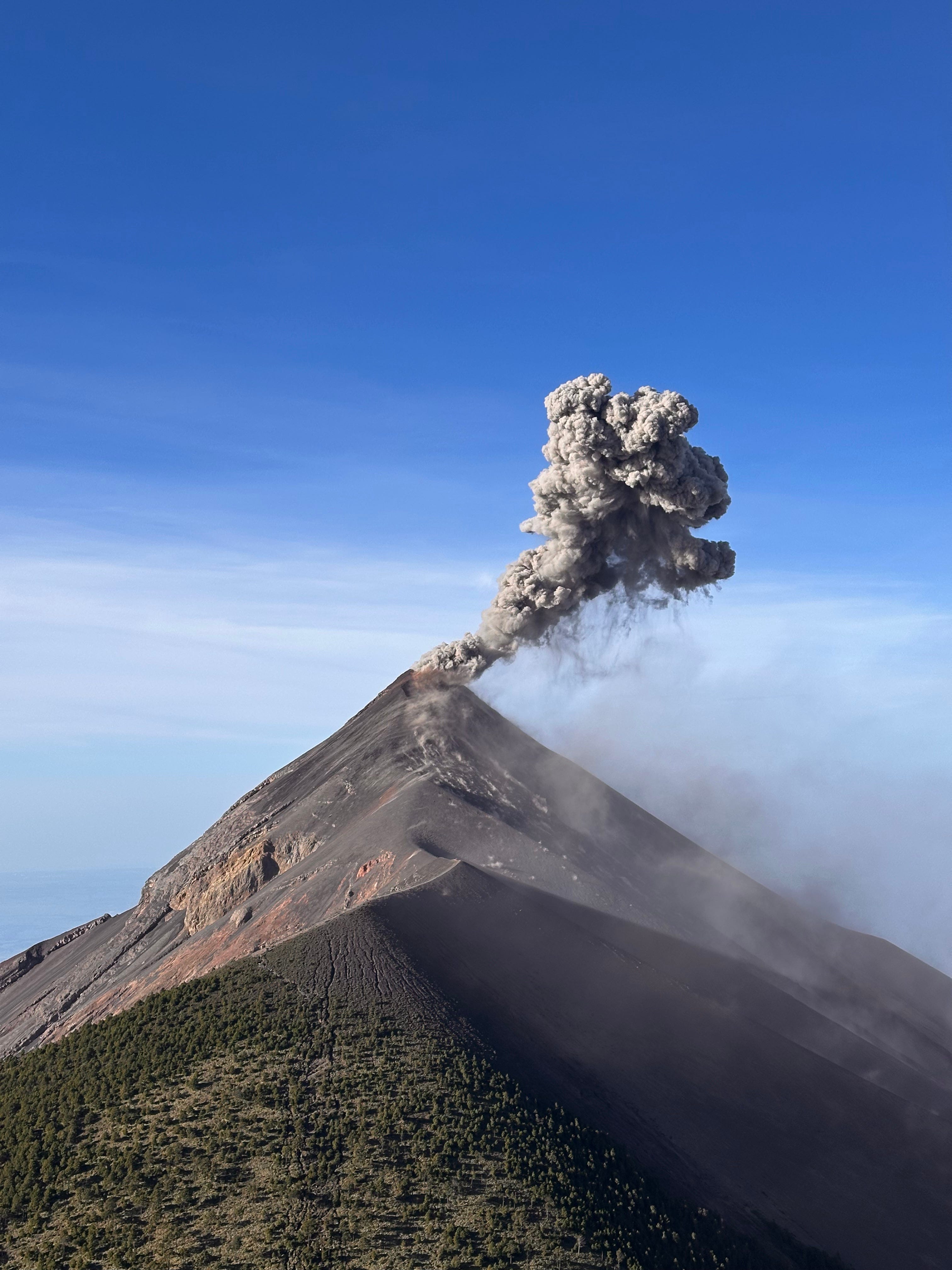
The photograph below is from my daughter’s summer vacation, when she went to Guatemala and climbed the volcanoes Acatenango and Fuego. I was too banged up to hike, and they didn’t invite me anyway.

7 months ago, I started rapidly deteriorating. I wrote about it in post 462, and in post 468 I wrote about the twelve days in Tennessee, where a clinic charged me over $15,000 for mineral water with a “signal” on it. My wife Judy spotted the fraud immediately. It took me over a week to become skeptical, but I stayed the second week anyway because I was still hypnotized. The doctor who saw me for an hour every day noticed my questions were getting sharper and suggested I go home early. That was a tell, and I missed it.
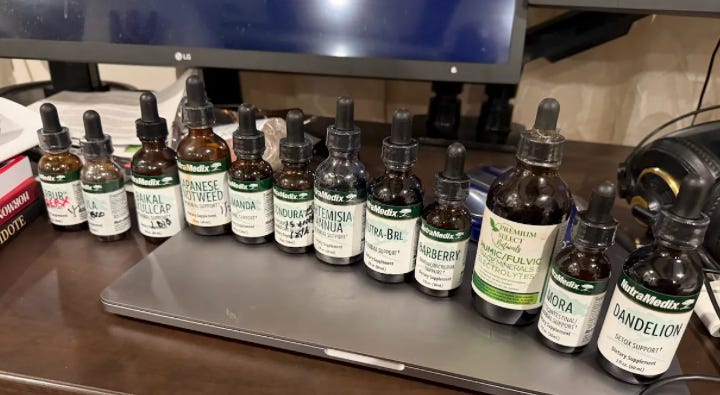
I came home with what I had before I came—my Parkinson’s that had progressed faster than the textbook describes, positive Lyme IgG antibodies with negative IgM and PCR, and a shelf of Cowden’s brown dropper bottles. The photograph below shows the shelf. Twelve bottles, eleven from one company, with my dosing scrawled on the labels in marker. This is William Lee Cowden, MD’s herbal Lyme protocol, and I have been taking it for weeks. This guy is widely respected in the alternative medicine community.
Before I keep going with that stuff, I owe myself the same review I gave the clinic in Franklin. What is in the bottles, what has been shown about them, and what can I find out about the man whose name is on the program?
That review became the first half of this post. The second half covers the other things on my mind: growth hormone and whether to double my dose; an Israeli ultrasound machine that burns holes in the brains of Parkinson’s patients without a scalpel; my weekly intravenous DMSO; my supplement list; and the test I have refused to take.
What the Cowden protocol is
NutraMedix of Jupiter, Florida, has sold the Cowden Support Program since 2007. The classic version used 14 products over nine months. Six were antimicrobials, sold in pairs and rotated: Banderol with Samento, Cumanda with Mora, Enula with Houttuynia. Each pair was taken at 30 drops twice a day for twelve and a half days, followed by 36 hours off, then the next pair. Takuna covered viruses for the first three months. Burbur and Pinella were the detox drops; Parsley, Sealantro, and Sparga were the drainage drops, plus serrapeptase and magnesium malate. Cowden told patients to continue until they had felt well for two consecutive months, and most stayed on it for six months. Retailers list it at about $350 a month, so a nine-month course costs $3,150 before the practitioner’s fee.
The company revised the program a few years ago and calls the new version Cowden Plus. It is a six-month, twice-daily regimen, and the single herbs have been combined into blends. Nutra-BRL, the bottle on my shelf with the odd name, is Samento plus Banderilla bark plus stevia, and a four-ounce bottle is $94.95. A company-affiliated practitioner’s training slides pair BRL with Borrelia, a second blend called BRT with Bartonella, and a third called BBS with Babesia. The letters spell out the targets, though the label does not say so, because a label that named a disease would draw a letter from the FDA. Dandelion replaced the three old drainage herbs. Condura, another bottle I did not recognize, is condurango bark, sold for inflammation. The month-one kit is $295.95.
The remaining bottles on my shelf, Baikal skullcap, Artemisia annua, and barberry, come from the Buhner tradition and from the Johns Hopkins laboratory work I describe below, rather than from Cowden’s original list. The humic and fulvic minerals are from a different company and a different story. My point is that a shelf like mine is a hybrid, assembled by advisors, and that the question of whether “the Cowden protocol works” is several questions. I have separated them.
What has been shown in people
The human study evidence for the Cowden program consists of a single conference presentation. Richard Horowitz, MD, a Lyme physician in Hyde Park, New York, started a group of patients who had failed antibiotics on the Cowden program in December 2006 and presented his experience at the ILADS meeting in 2007. Cowden’s slides report that 70 percent improved in under six months, and over 80 percent after the program was modified. One website reports the group size as 100 patients, Cowden’s slides as “a few hundred,” and a third site as “over 2,000.” Horowitz’s own 2013 summary was a single sentence: the Cowden, Zhang, and White protocols “are effective about 70 percent of the time.” No control group, no blinding, no defined endpoint, and no publication. Nineteen years later, there is still no publication.
The second human data point is a 2012 observational study in Augsburg, Germany, credited to Armin Schwarzbach, MD, PhD, which reports 80 percent symptomatic improvement and 90 percent improvement in laboratory markers. No sample size or methodology has been published. The third is a 2003 Dallas pilot of Samento that the company cites as showing 100 percent improvement and that does not appear in PubMed.
Horowitz did later publish, in 2019 and 2020, retrospective chart reviews of his dapsone combination therapy. The 2020 paper on double-dose dapsone reported 98 percent improvement in 40 charts and listed Samento, Banderol, Parsley, and Burbur among the adjuncts his patients took. The herbs were never separated from the antibiotics; the patients served as their own controls, and nobody was blinded.
That is the entire clinical record.
I want to be precise about what this means. It does not mean the program fails. It means that after nineteen years and tens of thousands of customers paying $350 a month, nobody with a financial stake in the outcome has run the study that would settle it. A company that believed in its product could fund a 60-patient placebo-controlled trial for less than it spends on a conference booth. Paul Lantos and colleagues reviewed more than thirty marketed alternative Lyme therapies for Clinical Infectious Diseases in 2015 and could not substantiate the efficacy of any. Herbal protocols were on the list.
What has been shown in a dish
The laboratory evidence is more positive and comes from an unexpected source. In 2020, Ying Zhang’s group at Johns Hopkins, funded by the Bay Area Lyme Foundation, tested fifteen botanical products against both growing and stationary-phase Borrelia burgdorferi, the dormant “persister” form that survives antibiotics in culture. At a one percent concentration, seven of the fifteen outperformed both doxycycline and cefuroxime against the stationary-phase cells. Cryptolepis sanguinolenta, a West African antimalarial plant, was the strongest and the only extract that eradicated the culture over 21 days of subculture. The other six were Japanese knotweed, black walnut, Artemisia annua, cat’s claw, Cistus incanus, and Baikal skullcap. Cat’s claw, which is Samento, was among the weaker of the seven. Stevia, andrographis, grapefruit seed extract, colloidal silver, and monolaurin did nothing.
In 2021, the same laboratory screened 46 herbs and compounds against Babesia duncani. Cryptolepis, Artemisia, Baikal skullcap, and knotweed were active. Samento, Cumanda, and Banderol, the three NutraMedix products the company assigns to Babesia and Borrelia, were inactive. Against Bartonella henselaethe same year, black walnut, Cryptolepis, knotweed, and the two skullcaps were active, and three of them eradicated stationary-phase cells within seven days.
The older laboratory work on Cowden’s own products came from Eva Sapi’s group at the University of New Haven and was published in the Townsend Letter in 2010, a trade magazine rather than an indexed journal. NutraMedix supplied the extracts. Samento and Banderol together eliminated Borrelia biofilm and round bodies, whereas doxycycline, tested at a concentration far above any patient’s blood level, increased the round bodies. Cowden’s slides cite later unpublished work from the same laboratory, claiming that stevia and jalap were the most active agents against the cyst and biofilm forms. Zhang found stevia inactive. Two laboratories, one funded by a foundation and the other supplied by the manufacturer, disagree about the manufacturer’s product.
The gap between a dish and a patient is the concentration. Zhang tested the extracts at concentrations from a quarter of a percent to one percent by volume. Nobody has measured what 30 drops of a tincture produce in a human bloodstream. The best-studied molecule in the group is resveratrol, the active constituent of Japanese knotweed. People given half a gram to five grams by mouth reach peak blood levels of 0.3 to 2.3 micromolar of the unconjugated drug, because the liver attaches a sulfate or glucuronide to most of it during the first pass. These are tiny fractions of the concentrations that kill spirochetes in culture. A tincture delivers milligrams. The Heidelberg pharmacology group found in 2019 that Banderol strongly inhibits the OATP1B1 and OATP1B3 liver transporters and that Samento inhibits CYP3A4 by 40 percent at a one percent concentration. The herbs may not reach the bacteria, but they do reach the enzymes that handle a patient’s other drugs.
The persister question
Everything in the last section rests on the idea that persister cells cause chronic symptoms. Zhang’s laboratory identified persisters in 2015, killed them in culture with daptomycin plus cefoperazone plus doxycycline, and in 2019 showed that persister inocula caused worse arthritis in mice and that daptomycin plus doxycycline plus ceftriaxone cleared the infection in the animals. That is solid work. The step from mice to people has not been made. The one xenodiagnosis study in humans, by Marques in 2014, found Borrelia DNA in a single patient with post-treatment symptoms and could not culture or transmit a living organism from anyone.
Four NIH-funded randomized trials tested prolonged antibiotics in people with persistent symptoms after Lyme treatment. Klempner in 2001 gave a month of intravenous ceftriaxone followed by two months of doxycycline, compared with placebo, and found no benefit. Krupp in 2003 gave 28 days of ceftriaxone to 55 patients, found that fatigue improved and cognition did not, and recorded six serious adverse events. Fallon in 2008 gave ten weeks of ceftriaxone, found a modest cognitive gain at twelve weeks that had vanished by 24, and noted adverse effects in a quarter of the patients. The Dutch PLEASE trial in 2016 gave 280 patients two weeks of ceftriaxone and then randomized them to twelve more weeks of doxycycline, clarithromycin with hydroxychloroquine, or placebo. The three arms were indistinguishable.
Persister-targeting drugs have done no better in people. Columbia’s double-blind disulfiram pilot screened 940 patients to enroll eleven, of whom nine finished. Six of the nine had less fatigue, five stopped the drug for side effects, three had liver enzyme elevations, and one was hospitalized. The authors could not assess efficacy. Dapsone has only Horowitz’s uncontrolled charts.
My reading is that persisters exist in a test tube and in a mouse, and no one has shown they cause anyone’s symptoms or that killing them in a person helps. The herbs on my shelf kill persisters in a dish more reliably than doxycycline. Whether they do anything in me is unknown, and the people selling them have declined to find out.
What I know about Lee Cowden
Cowden graduated from the University of Texas Medical School in Houston in 1978, trained in internal medicine and cardiology at St. Louis University, and was board-certified in both by 1985. He practiced in Texas, obtained an Arizona homeopathic license in 2005, co-founded the Academy of Comprehensive Integrative Medicine in 2008, and chairs its scientific advisory board. His biography states he retired from practice in 2019 to teach full-time. A European skeptic site reports he stopped practicing in 2009 and asked Texas to annul his license. I could not confirm the date from the board’s records.
Comment. I am not critical of this because I did the same thing in California. I had a full career and was reluctantly ready to retire. At 65, the California Medical Board was hassling me, and I resigned my license. They termed it “surrender.” I wrote about all this in Butchered by Healthcare.
Two Texas Medical Board orders are on the public record. In 1996, he received two years of probation for injecting an unapproved homeopathic product into a patient with Hodgkin’s disease and for prescribing Cytomel without documented hypothyroidism. In 2002, he was fined $2,500 and given three years of probation for inadequate records and consent involving three patients with what the board called questionable diagnoses and questionable treatments. Cowden has presented his side on Doug Kaufmann’s “Know the Cause” program, and I have written about what boards do to doctors who leave the reservation. A board order is not a verdict on a man’s character. It shows he was practicing outside the lines, which I already knew. I have done worse with the California board than Cowden did with Texas, and I give these board actions zero credibility.
The commercial entanglement is clearer. NutraMedix’s own history states that Cowden approached founder Tim Eaton to evaluate the company, then collaborated to build the program. Cowden’s website links to NutraMedix via an affiliate code, so purchases made from his page pay him. No royalty or equity figure has ever been disclosed. His protocol materials list cancer among the conditions treated with Cumanda and Samento. No FDA warning letter or FTC action has ever named NutraMedix or Cowden. That is more than most supplement companies can say.
Then there is the email. A few days after I arrived in Franklin, Tennessee, Cowden wrote to tell me that the people behind Biologix were sincere and that he had known the owner for 25 years. He did not say the treatments worked. Cowden and David Jernigan were both on the speaker list for the 2017 ACIM conference in Orlando, alongside Mercola and Zach Bush. Jernigan’s protocol was cited alongside Cowden’s at the 2013 ACIM Lyme meeting in Dallas. They are colleagues in a small world. Cowden vouched for a friend’s character and stayed silent about the friend’s results, which is what a careful man does when he knows the difference.
Commentary about Lee Cowden. He is a trained cardiologist who has spent thirty years in a field with no controlled trials, profits from the products he recommends, and whose judgment about the clinic that took my money was wrong. He may believe every word he says, however. I wrote in post 468 that sincerity is the most expensive thing in medicine because it makes the rest go down easy.
Is where I have landed on the herbals: They are cheaper than a trip to Tennessee, and unlike the ampules I was given there, they contain something. Laboratory evidence points to Cryptolepis, knotweed, Artemisia, and Baikal skullcap rather than Samento and Banderol. The clinical experience with these things is considerable, but anything that takes 6 months to work raises a question mark for me.
Comment on alternative medicine. One of my friends is a highly respected writer, and I have learned a great deal from him. One day, when he was visiting, he convinced my wife to allow him to press on her skull in various ways and told us that that would solve many of her problems.
Although I now have an utter hatred of conventional medicine and am firmly in the alternative medicine camp, these people have the same ability to fool themselves about their work that traditional physicians have. I have to remind myself to remain skeptical about everything.
The Lyme specialist and the second opinion
My testing shows the fingerprint of an old infection and no evidence of a current one. The Danish registry that followed 2,067 neuroborreliosis patients found their Parkinson’s risk was lower than the population’s, with a hazard ratio of 0.79, so the theory that Lyme caused my disease has no support from the one large dataset that looked. A friend who reads results for a living called active Lyme improbable in my case. I am considering a second opinion from a Lyme specialist who is respected in the alternative community.
What do I make of all this? The lack of robust studies by the people promoting the herbals and the complexity of the other purported therapies, which I experienced firsthand for several weeks, give me pause. I am hoping there is a better-documented, simpler solution, and I’m currently investigating intravenous ozone. This is an oxidizer like chlorine dioxide that works powerfully against many infections. I had my first treatment last night and seemed to have had some response, but it’s too early to be sure. It cost only $100. I am cautious about pursuing this idea because I had an adverse response to chlorine dioxide, another oxidizer.
Growth hormone, and whether to double it
The one thing my wife Judy is sure is helping is growth hormone. This is a pituitary hormone now synthesized in a bioidentical form using bacteria in a vat, and it has virtues that may be even more than testosterone. It affects many body systems and has almost no side effects. It has to be injected 5-7 days a week in a tiny quantity using a needle that’s about the size of a hair. It doesn’t hurt. Unfortunately, suppression has kept costs high, and it’s possible to spend thousands of dollars a month on it. For more detail, read the HGH chapter in Hormone Secrets.
I started at 0.7 mg a day about two months ago, and she says the change in my body is obvious. I notice a little more strength, and I’m a little bit bigger, but I don’t think I’m all that jacked. Based on what I know about the hormone, my instinct is that doubling the dose would give me back some energy, and Judy says to do it. It is expensive, and I have been putting off the decision. So I looked into what the dose means.
The endocrinology guidelines are cautious about numbers, but the 2019 American Association of Clinical Endocrinologists guideline provides them. A man over 60 starts at 0.1 to 0.2 mg a day and titrates in 0.1 to 0.2 mg increments, aiming for an IGF-1, which is the best marker of whether it is working, in the middle of the normal range for younger people. The standard review ladder is 0.4 to 0.5 mg a day under 30, 0.2 to 0.3 between 30 and 60, and 0.1 to 0.2 over 60. Pfizer’s KIMS registry followed 15,809 adults on replacement therapy for an average of five years. Their mean dose started at 0.30 mg a day and settled near 0.40 to 0.44. My 0.7 mg is about twice what the average treated adult takes and three to seven times the recommended starting dose for a man my age. The Finnish anti-doping service lists 1 to 1.3 mg a day as the therapeutic ceiling and 1 to 2 mg as the range athletes use, so 1.4 mg would put me above the ceiling and within the athletes’ range.
Daniel Rudman’s seminal 1990 New England Journal study started the anti-aging hormone business. Twelve men aged 61 to 81 received growth hormone for six months at 0.03 mg per kilogram three times a week, averaging about 1 mg a day for an 80-kilogram man, and nine received nothing. The treated men gained 8.8 percent lean mass, lost 14.4 percent fat, and thickened their skin. Rudman measured no strength, function, or energy. He did not ask the question everyone assumed he had answered.
Those who did found less. Hau Liu’s 2007 systematic review in Annals of Internal Medicine pooled eighteen randomized trials involving 508 healthy older people, with a mean age of 68. Growth hormone reduced fat by 2.1 kilograms and increased lean mass by 2.1 kilograms. It did nothing for strength, lipids, or bone density, and it produced more edema, more carpal tunnel syndrome, more joint pain, and more gynecomastia than placebo. The mean starting dose in those trials was 14.3 micrograms per kilogram per day, which for an 80-kilogram man is 1.14 mg. That is the dose I am contemplating, and at that dose the pooled trials found side effects and no strength. Marc Blackman’s 2002 JAMA trial gave older men growth hormone with testosterone for 26 weeks, the closest published match to what I take, and found 4.3 kilograms of lean mass, carpal tunnel symptoms, and glucose intolerance.
Nobody has trialed growth hormone in Parkinson’s disease. The closest is a 2012 Italian trial in ALS, where patients received up to 8 units every other day, averaging 1.33 mg per day, for a year. (3 units are a mg.) Brain chemistry and clinical decline were identical to placebo, and the insulin resistance index more than doubled, from 2.1 to 4.6. Serum IGF-1 in Parkinson’s patients is a contested subject, with one German group finding it elevated in early disease and the largest study, involving 404 patients, finding no difference from controls. A 2024 Mendelian randomization analysis found that people whose genes give them higher IGF-1 have a slightly higher Parkinson’s risk. None of that is strong, but none of it points toward more hormone.
The cancer question, which every physician asks about IGF-1, has better data than I expected. The KIMS adults had a cancer incidence ratio of 0.92 relative to the general population, indicating no excess, and no excess of prostate or colon cancer in particular. The European SAGhE cohort of 23,984 people treated as children found no overall cancer excess in those treated for simple growth failure. The excess appeared in acromegaly, which involves decades of pathological hormone levels. A meta-analysis of 9,677 patients found a 1.5-fold overall increase, with colorectal cancer 2.6-fold and thyroid cancer 9-fold. Replacement doses do not cause cancer. Acromegalic doses do. The question is which side of that line 1.4 mg a day falls on for a man of my age, and no one has measured it.
I had dinner with Trump’s trainer years before his first term, and he told me the man took every supplement. He didn’t mention growth hormone or testosterone, but I assumed they were in the mix. Schwarzenegger has admitted to steroids on the record many times, and though he has never admitted to growth hormone, it is generally acknowledged that his edge in bodybuilding was partly due to being in the first group of bodybuilders who used the combination in large doses. The story is that he took it through the Terminator shoots and functioned at a high level on little sleep.
What I know from my body is that thirty years ago, I took growth hormone and got so much vigor and libido back that I was sometimes verbally inappropriate with a few female patients. I have taken testosterone for thirty years, and it is the most impressive supplement I have ever experienced.
The money matters too. Omnitrope, with a discount card, is about $57 per milligram, so 0.7 mg a day is about $1,200 a month and 1.4 mg is $2,400. Genotropin at list price is $153 per milligram, so the doubled dose is $6,500 a month. There is also a legal wrinkle most physicians do not know. Under 21 U.S.C. 333(e), growth hormone may be distributed only for an FDA-approved indication, and a physician who prescribes it for vitality or aging commits a federal offense with a five-year maximum. The exposure is the prescriber’s. Most drugs may be prescribed off-label. This one may not.
Judy is seeing something, possibly body composition, but the evidence that taking more would benefit me is absent.
The Israeli Parkinson’s treatment machine
The company is Insightec, founded in 1999 in Tirat Carmel, outside Haifa, with seed funding from Elbit and GE Healthcare. The device is the Exablate Neuro, and it does what I expected. A helmet of 1,074 ultrasound transducers focuses its beams through the intact skull onto a spot a few millimeters across, heats that spot until the tissue dies, and monitors the temperature with the MRI the patient is lying in. The lesion is permanent. The company’s word is “incisionless,” and it is accurate. Nobody cuts the skin. The head is shaved, a stereotactic frame is pinned to the skull under local anesthetic, and the patient lies awake in the magnet for two or three hours so the surgeons can test his tremor between sonications. “No anesthesia” means no general anesthesia. The Michael J. Fox Foundation puts it plainly: the beams create enough heat to eliminate neurons. It is the thalamotomy neurosurgeons were doing in the 1950s, delivered by sound instead of a probe.
FDA approved it for essential tremor in 2016, for tremor-dominant Parkinson’s in December 2018, for a pallidotomy in patients with dyskinesia in November 2021, for a second side in essential tremor in 2022, and in July 2025 for a staged bilateral procedure in advanced Parkinson’s. The trials exist; the company paid for them, and the sham arms were small. In the 2016 essential tremor trial, 76 patients were randomized three to one, and hand tremor scores improved 47 percent at three months, with no change in the sham group, falling to 40 percent at a year. The 2018 tremor-dominant Parkinson’s trial had 27 patients, 20 treated and 7 sham, and tremor fell 62 percent versus 22 percent. The 2023 New England Journal pallidotomy trial had 94 patients, with 69 percent responders against 32 percent in the sham group, and three quarters of the responders were still responding at a year. The 2026 Lancet Neurology bilateral trial included 40 bilateral patients, with 33 percent motor improvement and no sham arm.
It treats tremor, rigidity, bradykinesia, and dyskinesia. It does not treat balance, gait, speech, or other non-motor symptoms. Balance and gait are not on the list of targets; they are on the list of complications. In the essential tremor trial, 36 percent of patients had gait disturbance early, and 9 percent still had it at a year. 38 percent had numbness early, with 14 percent at a year. After the second side in the bilateral trial, 28 percent had speech problems, and 25 percent had gait or balance problems. The lead investigator called the persistent rate “in the same ballpark” as bilateral deep brain stimulation. The benefit erodes. Of 26 tremor-dominant Parkinson’s patients followed a median of three years in Israel, 62 percent kept their result, 31 percent had partial return of tremor, and 8 percent had complete return. In the five-year Madrid data, the treated side stayed better, but the daily levodopa dose rose from 723 to 1,090 mg because the disease kept progressing. No one claims it slows anything.
The practical facts are these. About 104 American centers and 214 worldwide have the machine, including Stanford, UCSF, UCLA, Cedars, and, as of July 2026, Sutter in Sacramento. I couldn’t find a Kaiser program in California. Self-pay is $20,000 to $40,000. Medicare in California, under Noridian’s coverage determination, pays for a one-sided thalamotomy for essential tremor or tremor-dominant Parkinson’s, but only for patients who are ineligible for deep brain stimulation. It does not pay for pallidotomy or the second side. Most commercial insurers do not pay for any Parkinson’s indication. A skull that transmits sound poorly, a mini-mental score under 24, or a need for anticoagulation excludes a patient.
My cynicism about device companies mirrors my cynicism about Pharma, and I wrote about both in Butchered by “Healthcare.” Medtronic, the largest device maker in the country, has the same ethical structure as Pfizer, which paid the largest healthcare fraud settlement in American history in 2009 and kept selling. Insightec is not Medtronic, and its finances reveal something about its marketing. It lost $101 million in 2023, laid off a fifth of its staff, abandoned a $2 billion public listing, and raised money in 2024 at about a third of its earlier valuation. Koch has owned about 40 percent. None of this reflects positively on its actions.
A company in that position produces promotional YouTube videos with no substance, which is what I saw. The videos do not change the trials, and the trials show the machine reduces tremor on one side of the body in most patients, at the cost of a permanent brain hole and a one-in-ten chance of a lasting gait problem. This does nothing for the balance failure that is my main complaint. My guess was right. The machine has to cause damage to decrease the tremor. I will watch it, as I said I would, from outside the magnet.
Intravenous DMSO
I have tried infusing DMSO once a week by putting 20 and 30 mL of 99.995% in 500 mL of saline. I have read about a 50 mL dose done in Russia. I still take up to three tablespoons by mouth each day. I have felt nothing from the infusions, good or bad, and I promised in post 468 to report results, so this is the report. Nothing so far.
There are published intravenous doses that are higher than mine. Karaca’s 1991 series administered 1.12 grams per kilogram every six hours, as a 28 percent solution, to ten head-injury patients with dangerous intracranial pressure for up to ten days, and reported falling pressure in every patient with no change in blood pressure, kidney function, electrolytes, or blood counts. For an 80-kilogram man, that is 90 grams (cc) per dose. Stem cell transplant medicine infuses DMSO into thousands of patients a year as a cryoprotectant, and the accepted ceiling is 1 gram per kilogram per infusion. Across 1,173 infused patients in the mesenchymal cell trials, no death was attributed to the solvent. The cardiac deaths in the transplant literature were in patients with amyloid hearts and failed kidneys. The one forensic death at an alternative clinic that gets cited against DMSO turned out on toxicology to be intravenous hydrogen peroxide and an air embolism. The DMSO levels were below toxic.
The hazard is hemolysis, which depends on concentration and speed rather than grams. In whole human blood, DMSO is the most hemolytic of the common solvents, with half the cells lysed at 5.1 percent by volume. Cats given 200 mg per kilogram as a bolus excreted hemoglobin in their urine, and dilution stopped it. My 30 mL in 500 mL is about 6 percent going in, and it is diluted many times over on arrival. I could find no published dosing or safety series for the Russian 50 mL protocol. The Rimso-50 bladder product is also a 50 mL, 50 percent presentation, and I suspect the two have been confused somewhere along the chain.
What surprised me was the arithmetic of my oral dose. Three tablespoons is 45 mL, which, at DMSO’s density, is about 50 grams, or 0.62 grams per kilogram for me each day. That is the same order as Karaca’s intravenous dose and exceeds the transplant ceiling when added over a day. DMSO is absorbed nearly in full by every route. My infusion does not give me more DMSO than my mouth does. It gives me a higher peak for an hour, which is the variable that governs hemolysis and nothing else that I can identify. If a higher peak has a biological purpose, I have not found it, and I have not felt it.
One laboratory finding belongs here because it concerns my disease. A 2022 paper in Scientific Reports found that DMSO accelerates the clumping of alpha-synuclein, the protein whose aggregates define Parkinson’s, in a dose-dependent way in the test tube, with fibrils reaching a plateau in two days at 10 percent DMSO and seventeen days at 1 percent, while the protein without DMSO had not plateaued by day 17. The same paper fed mice 10 and 30 percent DMSO by mouth for two weeks and found no aggregation in their brains. The authors were warning laboratory workers that DMSO confounds synuclein experiments, and they made no clinical claim. However, we must all concede that test-tube studies are mostly clinically meaningless. This one is probably nonsense.
Lithium, methylene blue, and the B vitamins
I take 10 mg of lithium orotate and 60 mg of methylene blue daily, and I have started taking B vitamins because a few Parkinson’s patients have done well on them. High-dose thiamine gave me a paradoxical response, so I am going to try a small injectable dose of 25 mg or less once a week, along with injectable B12. Here is what the literature says about each.
The lithium data come from Buffalo. Thomas Guttuso’s open-label pilot gave sixteen Parkinson’s patients one of three regimens for 24 weeks: lithium carbonate titrated to a blood level of 0.4 to 0.5, lithium aspartate at 45 mg a day, or lithium aspartate at 15 mg a day. The middle arm produced the biomarker signal, a nearly eightfold rise in Nurr1 expression, and the only reductions in brain free water. The 15 mg arm produced nothing. In the 2025 follow-up, researchers sorted 28 patients by achieved blood level, and neurofilament light chain, a blood marker of neuronal damage, fell 12.8 percent in the highest group and rose 11.2 percent in the lowest. The lead author owns the company that sells the lithium aspartate. Ten milligrams of lithium orotate contains under half a milligram of elemental lithium, and even if my label means 10 mg of the element, I am at or below the arm that did nothing. Lithium also causes a postural tremor in anywhere from 4 to 65 percent of people who take it at the much higher psychiatric doses, and it is a recognized cause of drug-induced parkinsonism. Nobody has measured whether a microdose does either, and it seems vanishingly unlikely to me. The only way to know what my bottle delivers is a serum level, and I I think this is a waste of time.
Methylene blue has strong animal data in Parkinson’s models, reducing dopamine loss in the 6-OHDA rat and improving movement in the MPTP mouse. I wrote about it in posts 420 and 430. In humans, cognitive effects were observed at 260 to 280 mg, or 4 mg per kilogram, as single doses. Toxicity begins above 5 mg per kilogram, when the drug reverses its effect on the mitochondrial electron chain. My 60 mg is 0.75 mg per kilogram, which is in the safe range and lower than the range at which the Alzheimer’s trials of the derivative, at 150 and 250 mg a day, showed a dose-dependent fall in red cells and failed their endpoints. The pharmacology that matters to me is that methylene blue is a potent MAO-A inhibitor. Its label warns to avoid SSRIs, SNRIs, and other MAO inhibitors, and the early sign of the resulting serotonin toxicity is tremor. I would never take any of those drugs. Anyone on rasagiline or selegiline, which most neurologists prescribe to Parkinson’s patients, should know that methylene blue is in the same class.
Thiamine is the Costantini story, which I told in post 425. His published series gave 50 patients 100 mg intramuscularly twice a week and reported the total UPDRS score falling from 38.6 to 18.2 within three months, a larger effect than any drug has produced in a controlled trial. The study was open-label, with no control group and no blinding, in a disease where the placebo effect on the motor score reaches several points and is itself dopaminergic. No controlled trial has followed in ten years. The paradoxical worsening at high doses, and Costantini’s advice to cut the dose when it happens, appear on his patient websites, not in the paper. My paradoxical response is one more uncontrolled observation, and a 25 mg weekly injection is my attempt to find the bottom of the dose curve. I plan to start this soon, or even half of it.
B12 is the best-supported of the group, but it rests on an observation rather than a trial. Christine’s 2018 analysis of 680 newly diagnosed patients in the DATATOP cohort found that those in the lowest third of B12 lost walking ability at twice the rate of those in the highest third (1.53 versus 0.77 points per year), and that high homocysteine predicted cognitive decline. No one has randomized B12 in Parkinson’s. It is cheap and safe, and the association is strong enough that I would rather be in the top third. Anyone who ends up on carbidopa-levodopa should also know that the drug consumes vitamin B6 and that the old warning that B6 cancels levodopa applied to levodopa given without carbidopa.
The test I have refused
My disease has progressed faster than idiopathic Parkinson’s usually does, and my primary problems are tremor, weakness, and balance. That combination, at that speed, makes the diagnosis itself suspect. I have a friend in neurology at Kaiser whom I have not seen in years. She diagnosed my wife as having amyloid buildup in her cervical area that was destroying her ability to use her upper extremities. She referred Judy to a neurosurgeon who did a careful 5-hour procedure that removed it all and saved her.
I need her referral to see a fellowship-trained movement disorders specialist because Kaiser’s Southern California program requires one. The specialists are worth the trouble. In the Queen Square autopsy series, movement disorders neurologists had a 98.6 percent positive predictive value for Parkinson’s after follow-up. The 2016 meta-analysis found non-experts at 74 percent and experts at 80 percent on a first visit, and 84 percent after follow-up. The number that stopped me was from the Arizona autopsy study in 2014: of patients diagnosed with possible Parkinson’s who had never been treated with levodopa, only 26 percent had the disease at autopsy.
That last figure is about me because I have never taken Sinemet. I heard a movement disorders specialist lecture that it does not reliably improve tremor or balance, and since those are my problems, I concluded it was useless for me. Then there are the dyskinesias, which I wrote about in post 469. So I looked up what the lecturer said. He was half right. For balance, the 2022 systematic review of 18 studies found small gains on clinical balance scales and no effect on the reflexes that catch a fall. For tremor, he was wrong. In the Radboud levodopa challenge study of 83 tremulous patients, tremor amplitude fell 71 percent in responders, and 17 percent of patients were resistant. Five in six responded. Two 2025 papers say the same thing in their titles: tremor is highly responsive to levodopa.
My fear about dyskinesia has numbers too, and they are a bit less worrisome than I thought. Ku and Glass put the five-year dyskinesia rate at 70 percent for patients whose disease began in their forties and at 24 percent for those who began in their seventies. The risk falls by two percent for every year of age at onset. The Dutch LEAP trial in 2019 randomized 445 early patients to start levodopa now or in 40 weeks, and the delayed group had the same dyskinesia rate and the same disability at 80 weeks. The Ghana study found the same thing another way: patients who started levodopa years late developed their complications on the same schedule, counted from disease onset, as Italians who started early. Dyskinesia tracks the disease and the dose, and it is treatable, with extended-release amantadine adding about three hours a day of clean on time in the phase 3 trials. Roger Kurlan named the fear “levodopa phobia” in 2005 and called it a new cause of disability. I recognized myself, but I am still not convinced it is unrealistic.
The Movement Disorder Society’s diagnostic criteria list one absolute exclusion: no observable response to at least 600 mg of levodopa per day in a patient with at least moderate disease. A clear response is the strongest supporting criterion. Autopsy series report a levodopa response in 84 percent of true Parkinson’s, 36 percent of multiple system atrophy, and 15 percent of progressive supranuclear palsy. A man with rapid progression, tremor, and early balance failure who responds well to levodopa has ordinary Parkinson’s. One who does not has something else, and that something else has its own tests: midbrain measurements on MRI for PSP (Progressive supranuclear palsy); autonomic testing and the “hot cross bun” sign for MSA (multiple system atrophy); the spinal tap and gait trial for normal-pressure hydrocephalus, which a shunt can fix. The skin biopsy for phosphorylated alpha-synuclein, the Syn-One test, is 93 percent sensitive and 97 percent specific for synuclein disease, and a negative result points to a tauopathy (a class of neurodegenerative diseases defined by the abnormal buildup and clumping of tau protein inside the brain) or a non-degenerative cause. Kaiser’s one published coverage policy for that biopsy, from its Washington region, requires a documented levodopa trial first. A DaTscan would settle less than people think, because it cannot separate Parkinson’s from MSA or PSP and only tells a neurologist whether dopamine cells are dying.
Comment. A DaTscan is a specialized brain imaging test that helps diagnose Parkinson’s disease and other movement-related conditions.
What It Does
-
Finds dopamine loss: It tracks dopamine transporters (special proteins in the brain) to see if you have lost dopamine-producing nerve cells.
-
Separates conditions: It helps tell the difference between Parkinson’s syndrome and essential tremor (a common shaking condition that does not involve dopamine loss)
I have spent months and a great deal of money on tests that perform at chance and on treatments with no trials, and I have avoided the one test that costs less than a bottle of Aspirin, takes a month, and would tell me which disease I have. The levodopa trial is that test. I know why I avoided it. Taking Sinemet felt like accepting the diagnosis, and refusing it felt like fighting. That is the same self-deception I paid for in Tennessee, wearing different clothes.
What I am going to do
I will keep the herbs with laboratory support, namely Japanese knotweed, Artemisia, and Baikal skullcap; add Cryptolepis, which showed the strongest result and is missing from my shelf; and throw away those that have no support. I put the supposedly good ones in a box and am not taking them now. I faced the complexity of complying with them for about three weeks and realize now that, for an improbable, unproven result at six months, I couldn’t do it. I may change my mind.
I will hold growth hormone at 0.7 mg. I will continue DMSO by mouth indefinitely and stop the infusions soon unless I feel I’ve had a response. I will see my neurologist friend at Kaiser and possibly take the levodopa challenge under her supervision. I would not use the Israeli machine under any circumstance I can imagine.
Chasing low-probability treatments is what a man does when his life is on the line, and the high-probability options have run out. I have done it, and I have written every step here because once, when I told strangers everything, they saved my wife’s life.
Summary
The Cowden herbal protocol has one unpublished conference presentation behind it after nineteen years of sales. The herbs on my shelf kill dormant Borrelia in a dish, and the best ones aren’t Cowden’s. Lee Cowden is a sincere, respected alternative doctor and cardiologist with an affiliate code who vouched for a friend’s clinic and was wrong.
Growth hormone at 0.7 mg a day is twice the dose most treated adults take, and 1.4 mg is the dose at which pooled trials found edema, carpal tunnel, and no strength gains.
The Israeli machine is Insightec’s Exablate, which burns a permanent lesion into the thalamus or pallidum, reduces tremor in most patients on one side, does nothing for balance, and costs $30,000 unless Medicare’s narrow criteria are met. (Yoho comment: screw that; it’s crazy.)
My oral DMSO dose is larger than my intravenous dose, and no trials outside a ridiculous test-tube study report any problem with either.
My lithium dose is a conventional micro dose, and there’s no chance that it is doing any harm.
Levodopa helps tremor in five patients out of six; the dyskinesia risk for a man my age is one in four at five years; delaying the drug does not reduce it; and a levodopa trial is the single test that would tell me whether I have Parkinson’s at all.
Postscript
As I contemplated the problem I have, I reminded myself about how higher and higher doses of Sinemet are necessary to maintain symptom relief. This seems like clear evidence of depletion of the vitality of the substantia nigra during therapy, and it is obviously due to the drug. So while I may sound like I have decided what course I am going to take, I am still giving it thought. As I mentioned parenthetically above, I have started intravenous ozone therapy, and if that doesn’t work, I still have some other tricks up my sleeve. I will keep you guys in the loop.
Selected references
Feng J, Leone J, Schweig S, Zhang Y. Evaluation of natural and botanical medicines for activity against growing and non-growing forms of B. burgdorferi. Frontiers in Medicine 2020;7:6.
Zhang Y, Alvarez-Manzo H, Leone J, Schweig S, Zhang Y. Botanical medicines Cryptolepis sanguinolenta, Artemisia annua, Scutellaria baicalensis, Polygonum cuspidatum, and Alchornea cordifolia demonstrate inhibitory activity against Babesia duncani. Frontiers in Cellular and Infection Microbiology 2021;11:624745.
Datar A, Kaur N, Patel S, Luecke DF, Sapi E. In vitro effectiveness of Samento and Banderol herbal extracts on the different morphological forms of Borrelia burgdorferi. Townsend Letter, July 2010.
Lantos PM, Shapiro ED, Auwaerter PG, et al. Unorthodox alternative therapies marketed to treat Lyme disease. Clinical Infectious Diseases 2015;60:1776-1782.
Berende A, ter Hofstede HJ, Vos FJ, et al. Randomized trial of longer-term therapy for symptoms attributed to Lyme disease. New England Journal of Medicine 2016;374:1209-1220.
Texas Medical Board orders concerning William Lee Cowden, MD, 1996 and 2002, archived at quackwatch.org.
Liu H, Bravata DM, Olkin I, et al. Systematic review: the safety and efficacy of growth hormone in the healthy elderly. Annals of Internal Medicine 2007;146:104-115.
Blackman MR, Sorkin JD, Munzer T, et al. Growth hormone and sex steroid administration in healthy aged women and men. JAMA 2002;288:2282-2292.
Sacca F, Quarantelli M, Rinaldi C, et al. A randomized controlled clinical trial of growth hormone in amyotrophic lateral sclerosis. Journal of Neurology 2012;259:132-138.
Johannsson G, et al. Long-term safety of growth hormone in adults with growth hormone deficiency: overview of 15,809 GH-treated patients. Journal of Clinical Endocrinology and Metabolism 2022;107:1906-1919.
Elias WJ, Lipsman N, Ondo WG, et al. A randomized trial of focused ultrasound thalamotomy for essential tremor. New England Journal of Medicine 2016;375:730-739.
Krishna V, Fishman PS, Eisenberg HM, et al. Trial of globus pallidus focused ultrasound ablation in Parkinson’s disease. New England Journal of Medicine 2023;388:683-693.
Sinai A, Nassar M, Sprecher E, et al. Focused ultrasound thalamotomy in tremor dominant Parkinson’s disease: long-term results. Journal of Parkinson’s Disease 2022;12:199-206.
Noridian Healthcare Solutions. Local coverage determination L37729, magnetic resonance image guided high intensity focused ultrasound for essential tremor and Parkinson’s disease, revised September 2025.
Karaca M, Bilgin UY, Akar M, de la Torre JC. Dimethyl sulphoxide lowers ICP after closed head trauma. European Journal of Clinical Pharmacology 1991;40:113-114.
Reimer L, Haikal C, Gram H, et al. Low dose DMSO treatment induces oligomerization and accelerates aggregation of alpha-synuclein. Scientific Reports 2022;12:3737.
Guttuso T Jr, et al. Lithium’s effects on therapeutic targets and MRI biomarkers in Parkinson’s disease: a pilot clinical trial. IBRO Neuroscience Reports 2023;14:429-434.
Costantini A, Pala MI, Grossi E, et al. Long-term treatment with high-dose thiamine in Parkinson disease: an open-label pilot study. Journal of Alternative and Complementary Medicine 2015;21:740-747.
Christine CW, Auinger P, Joslin A, et al. Vitamin B12 and homocysteine levels predict different outcomes in early Parkinson’s disease. Movement Disorders 2018;33:762-770.
Dirkx MF, Zach H, van Nuland A, et al. Cerebral differences between dopamine-resistant and dopamine-responsive Parkinson’s tremor. Brain 2019;142:3144-3157.
Verschuur CVM, Suwijn SR, Boel JA, et al. Randomized delayed-start trial of levodopa in Parkinson’s disease. New England Journal of Medicine 2019;380:315-324.
Ku S, Glass GA. Age of Parkinson’s disease onset as a predictor for the development of dyskinesia. Movement Disorders 2010;25:2496-2500.
Adler CH, Beach TG, Hentz JG, et al. Low clinical diagnostic accuracy of early vs advanced Parkinson disease: clinicopathologic study. Neurology 2014;83:406-412.
Postuma RB, Berg D, Stern M, et al. MDS clinical diagnostic criteria for Parkinson’s disease. Movement Disorders 2015;30:1591-1601.
Gibbons CH, Levine T, Adler C, et al. Skin biopsy detection of phosphorylated alpha-synuclein in patients with synucleinopathies. JAMA 2024;331:1298-1306.